
Abstract
Objective
This systematic review and meta-analysis aimed to appraise the comparative efficacy and safety of appending programmed death-1 (PD-1) or PD-ligand 1 (PD-L1) checkpoint blockade to standard chemotherapy in cervical cancer, with prespecified analyses across both the full randomized cohort and the PD-L1-enriched subset.
Materials and Methods
In accordance with PRISMA 2020 guidelines, a comprehensive electronic search was conducted across PubMed, Scopus, the Cochrane Central Register of Controlled Trials, and ProQuest up to September 2025, targeting phase III randomized trials that incorporated PD-1 or PD-L1 blockade into a chemotherapy backbone. Pooled effect estimates were derived using random-effects modeling, generating hazard ratios (HR) for survival endpoints and risk ratios (RR) for tumor response. Methodological rigor was gauged with the Cochrane Risk of Bias 2 tool, while small-study effects were explored through DOI plots supplemented by the LFK index.
Results
Five phase III randomized controlled trials comprising 3,302 patients were included. The addition of PD-1/PD-L1 inhibitors to chemotherapy significantly improved overall survival [HR: 0.66, 95% confidence interval (CI): 0.60-0.73] and progression-free survival (HR: 0.68, 95% CI: 0.60-0.78), with low heterogeneity I2=0%. Objective response rates was modestly increased (RR: 1.14, 95% CI: 1.02-1.26). Survival benefits were mainly driven by PD-1 inhibitors (pembrolizumab and cadonilimab), whereas PD-L1 inhibitors showed less consistent effects. Absolute survival gains within 24 months were modest. Immune-related endocrine events, particularly hyperthyroidism and hypothyroidism, were more frequent, but severe toxicities (grade ≥3) were not significantly increased.
Conclusion
PD-1-targeting immunochemotherapy prolongs survival in cervical cancer while maintaining acceptable tolerability, positioning it as a leading treatment option for eligible patients. Further biomarker-driven and head-to-head trials are needed to optimize treatment selection.
Keywords: Cervical cancer, immunochemotherapy, PD-1 inhibitors, PD-L1 inhibitors, meta-analysis
PRECIS: Incorporating programmed death-1 (PD-1) or PD-ligand 1 checkpoint blockade into platinum-based chemotherapy yielded statistically significant gains in both overall survival and progression-free survival among women with cervical cancer. The therapeutic signal was predominantly attributable to PD-1-directed agents. and the tolerability profile remained clinically acceptable.
Introduction
Among gynecological malignancies, cervical cancer is the fourth most common cancer worldwide among females. Epidemiological data from 2022 estimated roughly 660,000 newly diagnosed cases alongside 350,000 cancer-attributable deaths during that year(, ). The burden distributes unevenly: low- and middle-income countries, hampered by limited cervical screening programs, shoulder approximately 90% of all mortality linked to this malignancy(). Modeling conducted by the International Agency for Research on Cancer forecasts that new cervical cancer diagnoses may surpass 948,000 annually by mid-century, accompanied by an estimated 542,000 deaths per year, highlighting the pressing requirement for therapeutic innovation(). In the high-risk, early-stage setting following definitive surgery, platinum-containing concurrent chemoradiotherapy constitutes the established adjuvant backbone, offering superior tumor control and reduced relapse compared with radiation monotherapy(). Nonetheless, acquired resistance curtails the long-term efficacy of this regimen. Relapse rates reaching 64% have been documented in the locally advanced subgroup, with a five-year cumulative recurrence incidence near 8%; survival declines correspondingly from 79.5% in patients who remain disease-free to 54% among those experiencing recurrence(, ).
Over the past decade, antibodies targeting the programmed death-1 (PD-1) receptor or its cognate ligand (PD-L1) have fundamentally altered systemic therapy paradigms, restoring immune-mediated tumor recognition in a growing range of solid malignancies(). In the specific context of cervical neoplasia, PD-1/PD-L1-directed agents have shown measurable antitumor activity(), contrasting with the incremental survival improvements historically achieved by conventional cytotoxic combinations(-). However, single-agent checkpoint blockade rarely elicits objective responses in more than one-fifth of unselected patients, and the majority ultimately experience disease progression, illustrating the inherent limitations of monotherapy at a population level(, ). Collectively, available evidence indicates that notwithstanding a compelling immunobiological rationale checkpoint monotherapy alone falls short of delivering reproducible, durable clinical benefit across heterogeneous cervical cancer populations(, ). Consequently, combining checkpoint blockade with cytotoxic chemotherapy has emerged as a rational avenue to amplify antitumor immunity and potentially overcome these constraints.
Several phase III randomized trials have now evaluated the incremental benefit of co-administering PD-1 or PD-L1 blockade with platinum-doublet chemotherapy in advanced, recurrent, or persistent cervical cancer. Although individual trials have favored the combination, the extent to which PD-1 versus PD-L1-directed regimens differ in efficacy remains unresolved. Earlier pooled analyses aggregated all checkpoint-chemotherapy combinations without differentiating between antibody classes, providing an overall efficacy estimate but limited insight into class-specific performance(). A subsequent synthesis reinforced these aggregate findings yet likewise lacked granular subgroup exploration across patient demographics, response categories, and toxicity profiles(). Critically, the question of whether performance disparities between PD-1 and PD-L1 agents originate from genuine pharmacological divergence or from confounding differences in trial architecture, patient selection, and analytical methodology has received scant investigation(). Against this backdrop, we designed the present systematic review and meta-analysis to provide a class-stratified quantitative appraisal of the of checkpoint inhibitors appended to chemotherapy in cervical cancer, encompassing both the intent-to-treat population and the PD-L1-enriched subset. Additional analyses focused on exploratory comparisons between PD-1- and PD-L1-based regimens, and on response rates, related adverse events, and subgroup analyses. Furthermore, time-dependent survival analyses across multiple follow-up intervals were performed to assess temporal patterns of treatment response and to evaluate short-term absolute survival differences.
Materials and Methods
Study Design
The study was conceived as a quantitative evidence synthesis reported in compliance with the PRISMA 2020 and the Cochrane Handbook for Systematic Reviews of Interventions(). The protocol was prospectively registered in PROSPERO (registration number: CRD420251145154).
Search Strategy and Selection Process
A systematic literature search including PubMed, Scopus, the Cochrane Library, and ProQuest was conducted through September 4, 2025. Supplementary hand-searching via Google Scholar and backward and forward citation tracking were also performed. The search algorithm integrated the terms “cervical cancer,” “PD-1,” and “PD-L1” and incorporated relevant Medical Subject Headings (). Retrieved citations were uploaded to the Rayyan.ai platform for de-duplication and screening(). Two authors (F.P.S.W. and P.C.N.B.S.) independently evaluated titles and abstracts; discrepancies were adjudicated by a third author (A.M.T.S.). Potentially relevant records advancing to full-text review were evaluated against the prespecified eligibility criteria.
Eligibility Criteria
Study eligibility was established a priori through the PICOS framework. We included randomized controlled trials that enrolled women diagnosed with cervical cancer and that compared the addition of a PD-1 or PD-L1 inhibitor to a platinum-based chemotherapy backbone with the same chemotherapy regimen without checkpoint inhibitor augmentation. The primary outcomes were overall survival (OS) and progression-free survival (PFS). Secondary outcomes included treatment response and safety. Response outcomes included objective response rate (ORR), disease control rate (DCR), complete response (CR), partial response (PR), stable disease (SD), and progressive disease (PD). Safety outcomes assessed the incidence of adverse events associated with PD-1/PD-L1 inhibitors compared with control treatment. Studies were excluded if (1) the full text was unavailable and the authors did not respond to two email requests, and (2) the studies did not use primary data.
Data Extraction
Relevant data were independently abstracted by two investigators (F.P.S.W. and A.M.T.S.) into a standardized extraction form and verified by a third investigator (A.A.Z.K.). Extracted items included bibliographic details (first author, publication year), study-level variables (trial design, drug identity, dosing regimen, sample size, participant age, median follow-up duration), and clinical variables (cancer subtype, disease status at enrollment, stage at initial diagnosis, histopathological classification, nodal involvement, prior treatment exposure, and chemotherapy agent). F.P.S.W. performed all statistical analyses. Hazard ratios (HRs) for OS and PFS were abstracted for the overall randomized population and the PD-L1-enriched subgroup, applying each trial’s own positivity threshold [combined positive score (CPS) ≥1 or tumor area positivity ≥1]. Data on response outcomes (including ORR, DCR, CR, PR, SD, and PD) and the number of events were also extracted. Safety data were also collected from each study.
Quality Assessment and Certainty of Evidence
Methodological rigor was appraised using the Cochrane Risk of Bias 2 (RoB 2.0) instrument, which covers five domains pertinent to randomized trial quality. Appraisals were carried out independently by F.P.S.W. and A.M.T.S.; disagreements were resolved through consultation with P.C.N.B.S. following Cochrane Collaboration procedures. The results were recorded in a standardized bias assessment file (.xlsx) and uploaded to the ROBVIS tool for visualization. The final assessments were presented using a traffic light plot to enhance interpretability and facilitate comparison across studies(). Evidence certainty for each outcome was evaluated using the Grading of Recommendations, Assessment, Development, and Evaluation (GRADE) approach(), which appraises pooled evidence across five domains. A.M.T.S. and F.P.S.W. independently graded each outcome, reconciling discordant ratings through discussion to reach consensus.
Statistical Analysis
All analyses were performed in RStudio (v4.4.1) using the meta, metafor, and metasens packages. For survival endpoints, HRs with 95% confidence intervals (CIs) were pooled via the Hartung-Knapp modification of the inverse-variance random-effects model. Response and safety endpoints were synthesized under an inverse-variance random-effects framework, yielding pooled risk ratios (RRs) and odds ratios (ORs) with corresponding 95% CIs and p-values. Between-study heterogeneity was quantified with the I2 statistic; values exceeding 50% were interpreted as indicating substantial heterogeneity(). Time-point pooled survival rates at 6-24 months were estimated separately for each treatment arm using a random-effects meta-analysis of proportions with logit transformation and REML estimation. The selection of these time points was based on the availability of consistently reported follow-up data across all included studies. Survival probabilities were reconstructed from published Kaplan-Meier plots by extracting the number-at-risk data reported beneath each curve at prespecified time points and converting these to proportional estimates relative to the total randomized sample. The restricted mean survival time (RMST) was computed for a 24-month horizon (τ=24) by integrating the area under the pooled step-function survival curve, and between-group differences were expressed as absolute mean differences and ratios with corresponding 95% CIs. All survival curve reconstructions and RMST analyses were performed in the intention-to-treat (ITT) population. In addition, subgroup analyses were performed according to patient and study characteristics. Publication bias was assessed using the DOI plot, which is recommended for meta-analyses with fewer than 10 included studies().
Results
Study Selection
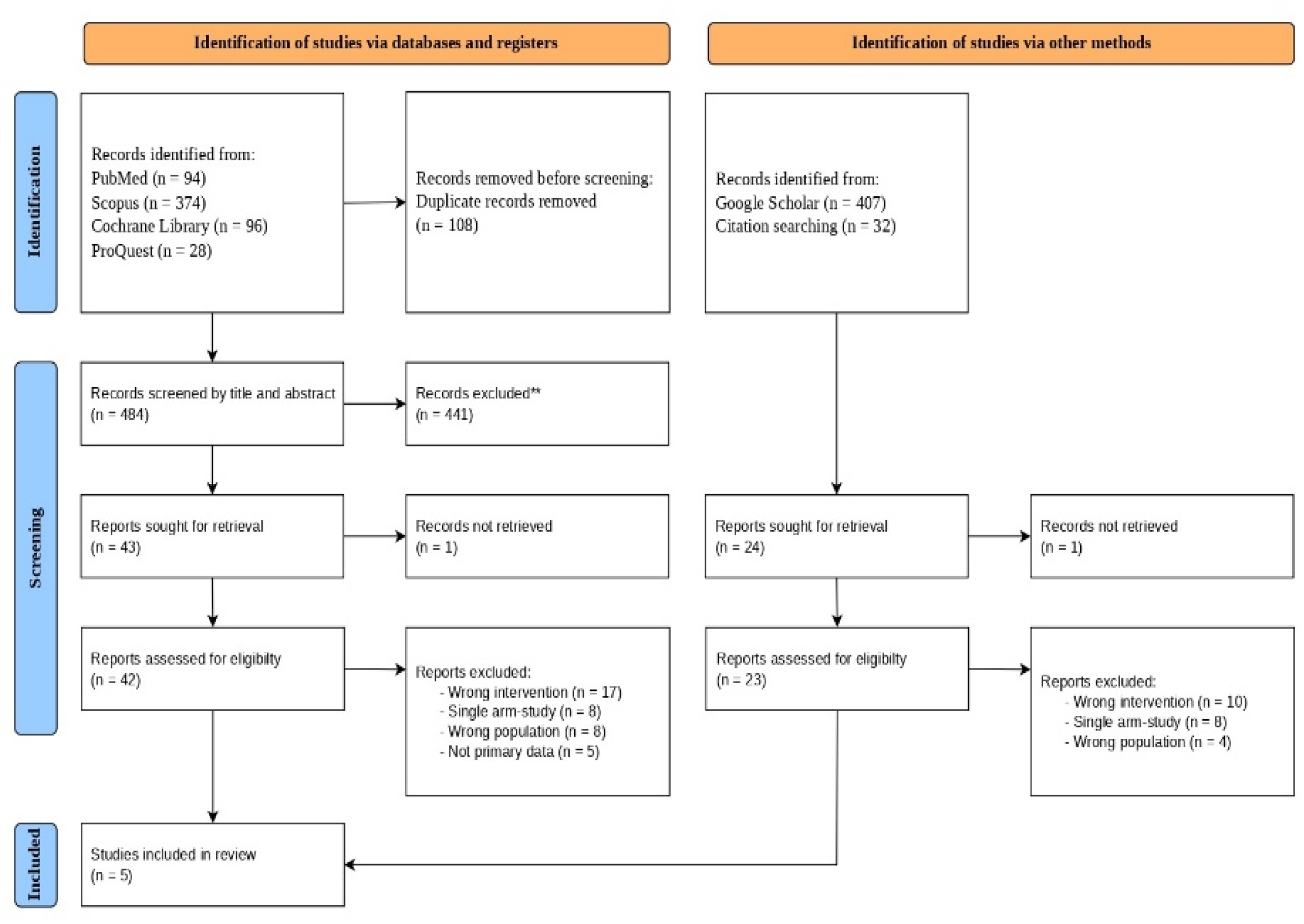
Database interrogation retrieved 592 citations; after removal of 108 duplicate entries, remained for title-abstract evaluation. Of these, 441 were deemed irrelevant and one was irretrievable, yielding 42 articles that advanced to full-text appraisal. Thirty-eight were subsequently excluded owing to non-qualifying interventions, single-arm trial architectures, populations outside the scope of this review, or reliance on secondary data. Parallel hand-searching identified 439 supplementary citations, of which 23 underwent full-text scrutiny and one met all eligibility criteria. Ultimately, five phase III trials constituted the analytic dataset. The complete screening cascade is depicted in .
Demographic Characteristics
Across all eligible trials, the analytic cohort comprised 3,302 women with a cervical cancer diagnosis. Experimental arms received a PD-1 or PD-L1 antibody added to platinum-based chemotherapy, whereas comparator arms received the same chemotherapy backbone with a matched placebo or no additional agent. Three trials evaluated PD-1-directed compounds (pembrolizumab in two; cadonilimab in one), and the remaining two assessed PD-L1-directed agents (durvalumab and atezolizumab, respectively). Publication dates spanned from 2021 to 2024, with trial enrollment conducted across multinational sites. Enrolled participants were women aged 48 years or older who were randomized in a balanced manner to the treatment arms. Median observation periods ranged from 18.5 to 32.9 months across studies. A complete summary of baseline demographic variables is provided in .
Table 1. Demographic characteristics
Study | Country | Study design | PD-1/ PD-L1 | Intervention | Sample size | Age | Follow-up (months) |
|---|---|---|---|---|---|---|---|
Colombo et al.(), 2021 | Multi-country | RCT, double-blind, phase-3 | PD-1 | Pembrolizumab + chemotherapy | 308 | 52.3±14.3 | 22.0 |
Placebo + chemotherapy | 309 | 50.3±14.3 | |||||
Lorusso et al.(), 2024 | Multi-country | RCT, double-blind, phase-3 | PD-1 | Pembrolizumab + chemotherapy | 529 | 48.7±12.6 | 29.9 |
Placebo + chemotherapy | 531 | 50.0±13.3 | |||||
Monk et al.(), 2023 | Multi-country | RCT, double-blind, phase-3 | PD-L1 | Durvalumab + chemotherapy | 385 | 49.3±11.9 | 18.5 |
Placebo + chemotherapy | 385 | 48.3±12.6 | |||||
Oaknin et al.(), 2024 | Multi-country | RCT, open-label, phase-3 | PD-L1 | Atezolizumab + chemotherapy | 206 | 51.0±12.6 | 32.9 |
Placebo + chemotherapy | 204 | 52.5±13.0 | |||||
Wu et al.(), 2024 | China | RCT, double-blind, phase-3 | PD-1 | Cadonilimab + chemotherapy | 222 | 56.0±8.7 | 25.6 |
Placebo + chemotherapy | 223 | 56.0±8.7 |
Data were presented as mean ± SD
SD: Standard deviation, RCT: Randomized controlled trial, PD-1: Programmed death-1, PD-L1: Programmed death-ligand 1
Clinical Characteristics
The included studies involved patients with persistent, recurrent, or metastatic cervical cancer (PRMC) and locally advanced cervical cancer. Baseline disease status at trial enrollment and stage at initial diagnosis were inconsistently reported across studies. Histopathological subtypes included squamous and non-squamous carcinomas. The extent of lymph node involvement and prior treatment exposure differed among the included trials. Dosing regimens varied according to the specific checkpoint inhibitor administered. Chemotherapy backbones commonly consisted of paclitaxel combined with cisplatin or carboplatin. In selected trials, bevacizumab, an anti-vascular endothelial growth factor (VEGF) agent, was used concomitantly. Detailed clinical characteristics of the included studies are provided in .
Quality Assessment
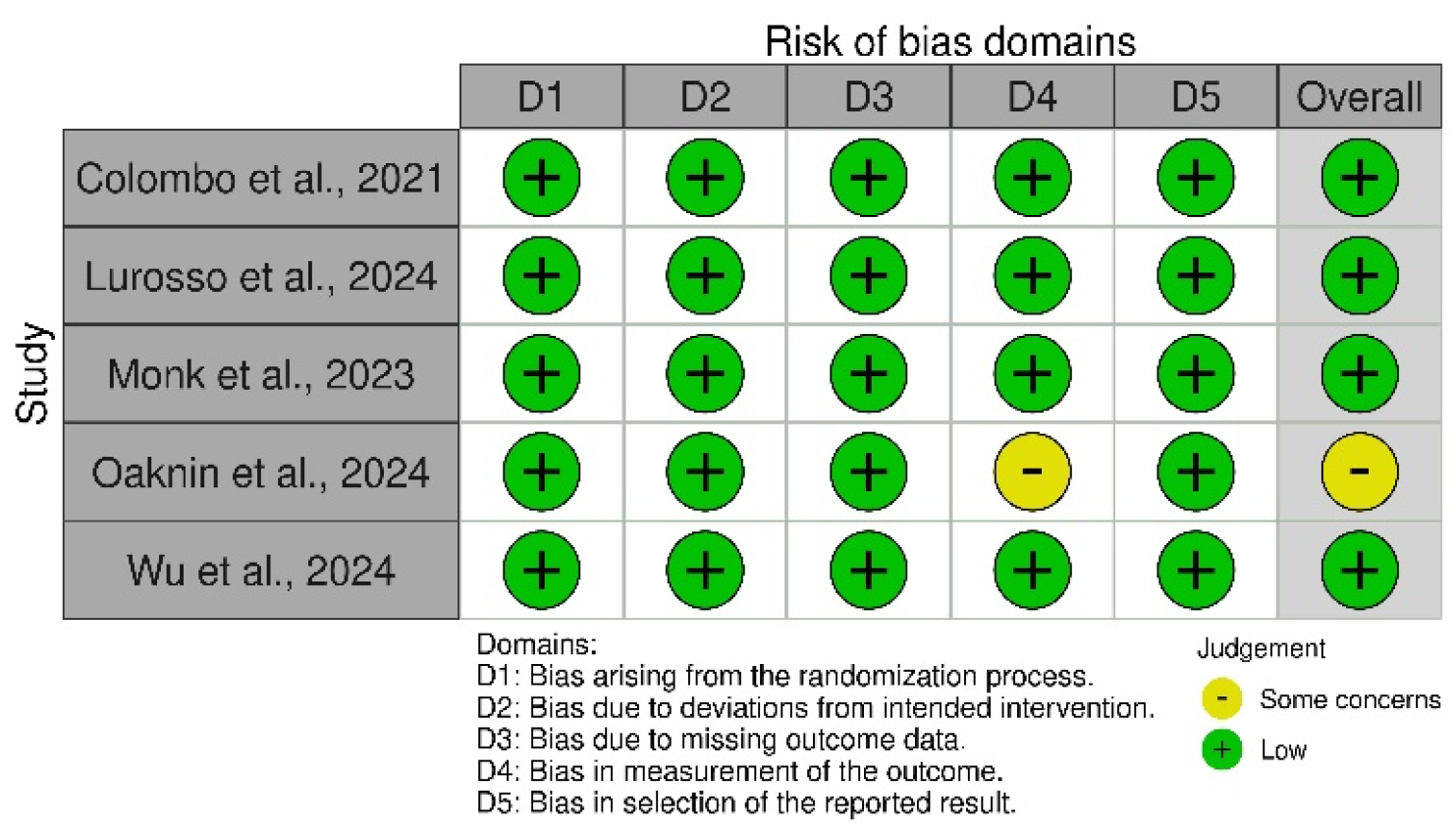
The results of the quality assessment using RoB 2.0 are presented in . One study was judged to be at moderate risk of bias because the investigators were not blinded during the assessment of PFS. The remaining four studies demonstrated a low risk of bias across all five domains.
Efficacy of Combination PD-1/PD-L1 Inhibitor with Chemotherapy versus Chemotherapy Alone on OS and PFS
presents the effect on OS in the ITT population of PD-1/PD-L1 inhibitors combined with chemotherapy, compared with chemotherapy alone. Pooled analysis demonstrated that the addition of PD-1/PD-L1 inhibitors significantly improved OS (HR: 0.66, 95% CI: 0.60-0.73; p=0.0003), with low heterogeneity (I2=0%). In subgroup analysis, PD-1 inhibitors in combination with chemotherapy were associated with a significant reduction in the risk of death (HR: 0.66, 95% CI: 0.62-0.70; p=0.0012, I2=0%). However, PD-L1 inhibitors did not show a significant benefit (HR: 0.67, 95% CI: 0.17-2.66; p=0.1683, I2=14%). PFS outcomes are presented in . The pooled analysis demonstrated a significant improvement in PFS with the addition of PD-1/PD-L1 inhibitors (HR: 0.68, 95% CI: 0.60-0.78; p=0.0014), with low heterogeneity (I2=0%). Subgroup analyses revealed that PD-1 inhibitors combined with chemotherapy significantly reduced the risk of disease progression (HR: 0.65, 95% CI: 0.59-0.73; p=0.0035, I2=0%), whereas PD-L1 inhibitors did not provide a statistically significant benefit (HR: 0.76, 95% CI: 0.20 - 2.90; p=0.2318, I2=0%).
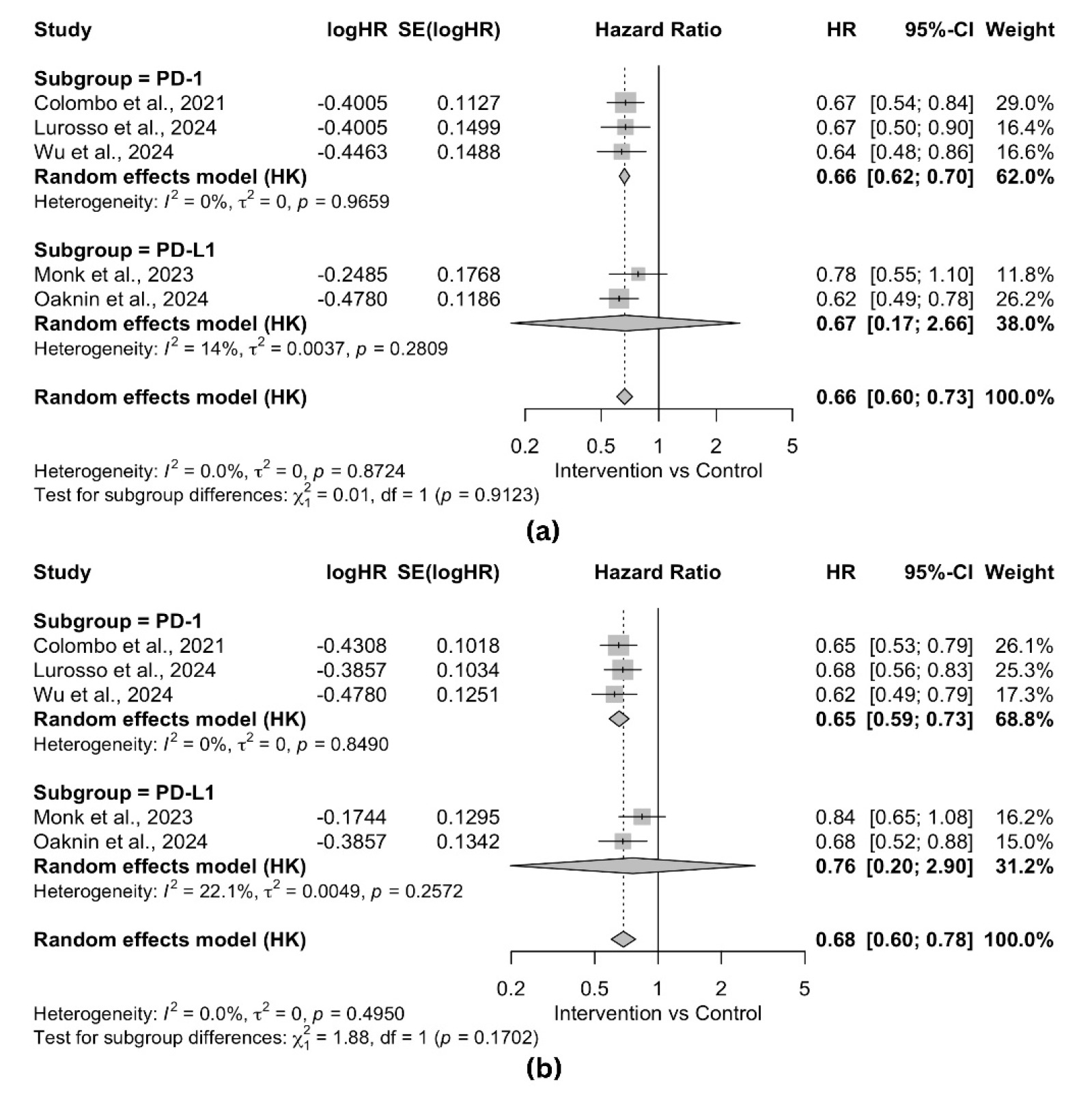
CI: Confidence interval, HR: Hazard ratio, OS: Overall survival, PFS: Progression-free survival, ITT: Intention-to-treat, PD-1: Programmed death-1, PDL-1: Programmed death-ligand 1
The analysis of patients with PD-L1-positive tumors was presented in . PD-1 inhibitor trials defined positivity using a CPS ≥1, whereas PD-L1 inhibitor trials applied TAP ≥1. In the PD-1 subgroup, pooled analysis showed significant improvements in both OS (HR: 0.66, 95% CI: 0.61-0.71; p=0.0019) and PFS (HR: 0.65, 95% CI: 0.55-0.76; p=0.0073) with low heterogeneity (I2=0%). In contrast, in the PD-L1 subgroup, no statistically significant differences were observed for OS (HR: 0.68, 95% CI: 0.59-1.17; p=0.2567) and PFS (HR: 0.84, 95% CI: 0.64-1.10; p=0.2070).
An indirect comparison between the ITT and PD-L1-positive populations, stratified by inhibitor class, demonstrated a consistent pattern across analyses. In PD-1 inhibitor trials, the magnitude of OS benefit was similar between the ITT population (HR: 0.66) and the PD-L1-positive subgroup (HR: 0.66), with comparable reductions in the risk of progression (PFS HR: 0.65 in both analyses). These findings suggest that PD-L1 positivity defined at CPS ≥1 did not substantially modify the relative treatment effect of PD-1-based immunochemotherapy. In contrast, PD-L1 inhibitor trials did not demonstrate a statistically significant survival benefit in either the ITT population or the PD-L1-positive population. However, these indirect comparisons should be interpreted with caution due to the small number of PD-L1 inhibitor trials and the wide CIs, which reduce statistical precision.
The comparative analysis of OSR and PFSR at 6-24 months using time-point meta-proportion estimates and RMST analysis is presented in . Pooled time-point survival estimates demonstrated consistently higher OS and PFS rates in the intervention group. RMST analyses further supported this trend. However, the differences did not reach statistical significance for OS (mean difference 1.03 months, 95% CI: -0.61 to 2.67; p=0.217) and were borderline significant for PFS (mean difference 1.61 months, 95% CI: -0.03 to 3.25; p=0.054). These findings indicate that, although hazard-based analyses reveal significant relative risk reductions, the absolute gain in survival time within the first 24 months remains modest.
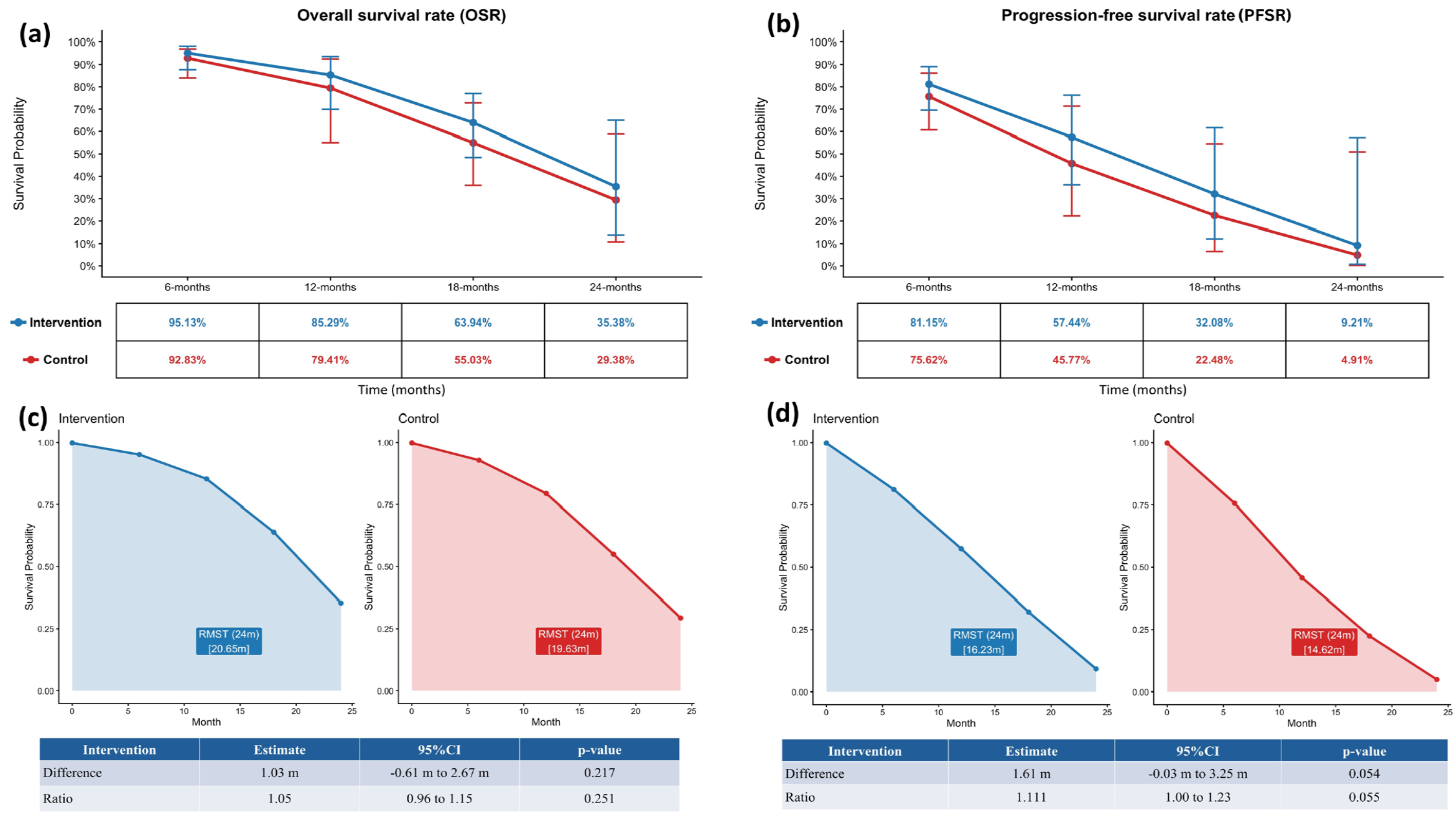
RMST: Restricted mean survival time, CI: Confidence interval
When data were stratified by inhibitor class, a similar pattern was observed in the PD-1 subgroup, where time-point survival probabilities remained consistently higher in the intervention arm across all intervals (). At 24 months, OSR and PFSR were numerically improved compared with the control, and RMST analyses showed a mean difference of 1.20 months for OS and 1.77 months for PFS. However, these differences did not reach statistical significance, with CIs crossing zero. In contrast, the PD-L1 subgroup demonstrated smaller absolute differences between treatment arms at corresponding time points (). RMST estimates in this subgroup revealed minimal improvements in OS and PFS, with wide CIs and non-significant p-values, indicating limited precision and no clear absolute short-term survival advantage within 24 months.
Indirect comparison across subgroups suggests that the magnitude of absolute survival gain was numerically greater in PD-1-based trials than in PD-L1-based trials, particularly for PFS; however, overlapping CIs and the absence of statistically significant RMST differences preclude definitive conclusions regarding class-specific effects on early absolute survival duration. Collectively, these findings reinforce that, although relative risk reductions are consistently observed in hazard-based analyses, the translation into short-term absolute survival gains is modest, especially within a 24-month time horizon.
Response Rate of PD-1/PD-L1 Inhibitors plus Chemotherapy versus Chemotherapy Alone
Response outcomes of PD-1/PD-L1 inhibitors combined with chemotherapy versus chemotherapy alone, including ORR, DCR, CR, PR, SD, and PD, are summarized in . A total of five studies were included in the analysis, comprising three studies evaluating PD-1 inhibitors and two studies evaluating PD-L1 inhibitors. The pooled analysis of ORR showed that the addition of PD-1/PD-L1 inhibitors was significantly higher than control (RR: 1.14, 95% CI: 1.02-1.26; p=0.02623; I2=66.4%). In subgroup analysis, PD-1 and PD-L1 were not statistically significant (RR: 1.17, 95% CI: 0.98-1.40; p=0.0632; I2=45.0%) and (RR: 1.09, 95% CI: 0.48-2.43; p=0.4163; I2=75.4%), respectively. For DCR, the pooled analysis was not statistically significant between both groups (RR: 1.09, 95% CI: 0.97-1.23; p=0.118; I2=73.0%). Consistent findings were observed in subgroup analyses for both PD-1 and PD-L1 inhibitors.
Table 2. Pooled analysis of response rate
Outcome | Number of participants | RR (95%CI) | p-value | I2 |
|---|---|---|---|---|
ORR | 3,300 | 1.14 (1.02; 1.26) | 0.0262* | 66.4% |
PD-1 | 2,120 | 1.17 (0.98; 1.40) | 0.0632 | 45.0% |
PD-L1 | 1,180 | 1.09 (0.48; 2.43) | 0.4163 | 75.4% |
DCR | 3,302 | 1.09 (0.97; 1.23) | 0.1179 | 73.0% |
PD-1 | 2,122 | 1.10 (0.80; 1.51) | 0.3183 | 81.1% |
PD-L1 | 1,180 | 1.09 (0.48; 2.43) | 0.4163 | 75.4% |
CR | 3,285 | 1.30 (1.00; 1.70) | 0.0491* | 66.9% |
PD-1 | 2,105 | 1.36 (0.78; 2.37) | 0.1380 | 74.9% |
PD-L1 | 1,180 | 1.26 (0.11; 14.41) | 0.4462 | 75.3% |
PR | 3,285 | 1.02 (0.91; 1.14) | 0.6582 | 0.0% |
PD-1 | 2,105 | 1.04 (0.75; 1.44) | 0.6896 | 41.1% |
PD-L1 | 1,180 | 1.00 (0.87; 1.15) | 0.8418 | 0.0% |
SD | 3,285 | 0.68 (0.45; 1.03) | 0.0603 | 42.9% |
PD-1 | 2,105 | 0.62 (0.34; 1.11) | 0.0710 | 20.1% |
PD-L1 | 1,180 | 0.88 (0.01; 108.86) | 0.7970 | 72.0% |
PD | 3,285 | 0.39 (0.13; 1.23) | 0.0857 | 80.4% |
PD-1 | 2,105 | 0.57 (0.25; 1.31) | 0.1020 | 20.7% |
PD-L1 | 1,180 | 0.24 (0.00; 502367.70) | 0.4287 | 94.3% |
*Statistically significant (p<0.05)
SD: Stable disease, CI: Confidence interval, PD-1: Programmed death-1, PD-L1: Programmed death-ligand 1, CR: Complete response, PR: Partial response, ORR: Overall response rate. DCR: Disease control rate, RR: Risk ratios
The pooled analysis for CR showed statistically significant improvement with PD-1/PD-L1 inhibitors plus chemotherapy (RR: 1.30, 95% CI: 1.00-1.70; p=0.049; I2=66.9%); however, neither the PD-1 subgroup nor the PD-L1 subgroup reached statistical significance. No significant differences were observed for PR in the pooled analysis (RR: 1.02, 95% CI: 0.91-1.14; p=0.658; I2=0.0%) or in subgroup analyses of PD-1 and PD-L1 inhibitors. For SD, the pooled analysis showed a non-significant trend (RR: 0.68, 95% CI: 0.45-1.03; p=0.060; I2=42.9%), with similar nonsignificant findings in both PD-1 and PD-L1 subgroups. The pooled analysis for PD did not demonstrate a statistically significant (RR: 0.39, 95% CI: 0.13-1.23; p=0.086; I2=80.4%) result, and subgroup analyses were also nonsignificant.
Comparison of Safety between PD-1/PD-L1 Inhibitor + Chemotherapy and Chemotherapy Alone
Safety outcomes for any-grade adverse events are summarized in . The analysis showed that adding PD-1/PD-L1 inhibitors to chemotherapy significantly increased the incidence of endocrine adverse events compared with chemotherapy alone, including hyperthyroidism (p<0.00001) and hypothyroidism (p<0.00001). Elevated aspartate aminotransferase levels were more frequent in the intervention group (p=0.0009). Hematologic adverse events were significantly increased in the intervention group, including leukopenia (p=0.04) and neutropenia (p=0.03); pyrexia (p=0.03) was also significantly increased. The intervention group also showed a significant decrease in appetite (p=0.05). No significant differences were identified for gastrointestinal symptoms, musculoskeletal pain, renal toxicity, electrolyte disturbances, infections, and most hematologic parameters.
Safety outcomes for grade ≥3 adverse events are presented in . The addition of PD-1/PD-L1 inhibitors to chemotherapy significantly decreased appetite (p=0.02) compared to chemotherapy alone. No significant differences were observed in severe hematologic parameters, endocrine adverse events, gastrointestinal adverse events, infections, renal toxicity, electrolyte disturbances, or musculoskeletal symptoms.
Subgroup Analysis
Subgroup analyses for OS and PFS are presented in . The intervention group demonstrated a consistent OS benefit across most prespecified subgroups, including patients aged <65 years, non-white race, Eastern Cooperative Oncology Group (ECOG) performance status scores of 0 and 1, treatment with PD-1/PD-L1 inhibitors (atezolizumab, cadonilimab, and pembrolizumab), PD-CPS of 1 to <10, use and non-use of concomitant bevacizumab, presence and absence of metastatic disease, non-squamous cell carcinoma histology, PRMC, study design (double-blind and open-label), studies of low and moderate risk of bias, and publication year <2023 and ≥2023. For PFS, the intervention group demonstrated a significant benefit across most subgroup analyses. This benefit was observed in patients aged <65 years and ≥65 years, across racial subgroups (white and non-white), patients with ECOG performance status scores of 0 and 1, treatment using PD-1/PD-L1 inhibitors (atezolizumab, cadonilimab, and pembrolizumab), patients with a PD-L1 CPS ≥10, with and without concomitant bevacizumab, presence and absence of metastatic disease, receiving cisplatin-based chemotherapy, patients with prior chemotherapy exposure, PRMC, study designs (double-blind and open-label), studies with low or moderate risk of bias, and studies published ≥2023. The forest plot of response rate outcomes was presented in .
Table 3. Subgroup analysis
OS | PFS | |||||
|---|---|---|---|---|---|---|
Variable | k | HR (95%CI) | p-value | k | HR (95%CI) | p-value |
Age | ||||||
<65 | 4 | 0.66 (0.59; 0.74) | 0.0014* | 5 | 0.69 (0.61; 0.79) | 0.0013* |
≥65 | 4 | 0.71 (0.35; 1.40) | 0.2053 | 5 | 0.58 (0.37; 0.89) | 0.0236* |
Race | ||||||
White | 3 | 0.74 (0.52; 1.08) | 0.0749 | 3 | 0.69 (0.54; 0.87) | 0.0207* |
Others | 3 | 0.61 (0.38; 0.98) | 0.0465* | 3 | 0.64 (0.63; 0.66) | 0.0001* |
ECOG performance-status score | ||||||
0 | 4 | 0.70 (0.64; 0.78) | 0.0016* | 4 | 0.68 (0.62; 0.74) | 0.0008* |
1 | 4 | 0.63 (0.55; 0.73) | 0.0019* | 4 | 0.63 (0.56; 0.71) | 0.0011* |
PD-1/PD-L1 therapy | ||||||
Atezolizumab | 1 | 0.62 (0.49; 0.78) | <0.0001* | 1 | 0.68 (0.52; 0.88) | 0.0041* |
Cadonilimab | 1 | 0.64 (0.48; 0.86) | 0.0027* | 1 | 0.62 (0.48; 0.79) | 0.0001* |
Durvalumab | 1 | 0.78 (0.55; 1.10) | 0.1600 | 1 | 0.84 (0.65; 1.08) | 0.1783 |
Pembrolizumab | 2 | 0.67 (0.67; 0.67) | <0.0001* | 2 | 0.66 (0.50; 0.88) | 0.0351* |
PD-L1 combined positive score | ||||||
<1 | 2 | 0.86 (0.17; 4.47) | 0.4579 | 2 | 0.80 (0.17; 3.83) | 0.3270 |
1 to <10 | 2 | 0.68 (0.57; 0.82) | 0.0242* | 2 | 0.65 (0.36; 1.16) | 0.0668 |
≥10 | 2 | 0.63 (0.33; 1.20) | 0.0699 | 2 | 0.56 (0.33; 0.96) | 0.0566* |
Concomitant bevacizumab | ||||||
Yes | 3 | 0.66 (0.47; 0.93) | 0.0342* | 3 | 0.68 (0.49; 0.94) | 0.0372* |
No | 4 | 0.68 (0.51; 0.89) | 0.0207* | 4 | 0.68 (0.46; 1.00) | 0.0492* |
Metastatic disease | ||||||
Yes | 3 | 0.79 (0.63; 0.98) | 0.0424* | 3 | 0.77 (0.53; 1.12) | 0.0961 |
No | 3 | 0.61 (0.47; 0.80) | 0.0157* | 3 | 0.57 (0.45; 0.72) | 0.0089 |
Chemotherapy received | ||||||
Carboplatin | 2 | 0.69 (0.07; 6.94) | 0.2926 | 3 | 0.67 (0.45; 1.01) | 0.0522 |
Cisplatin | 3 | 0.64 (0.32; 1.28) | 0.1089 | 4 | 0.69 (0.55; 0.86) | 0.0129* |
Previous chemoradiotherapy | ||||||
Yes | 2 | 0.58 (0.28; 1.22) | 0.0686 | 2 | 0.55 (0.55; 0.55 | <0.0001* |
No | 2 | 0.80 (0.37; 1.74) | 0.1712 | 2 | 0.74 (0.49; 1.13) | 0.0704 |
Histology | ||||||
Squamous cell carcinoma | 2 | 0.68 (0.32; 1.44) | 0.0968 | 2 | 0.62 (0.15; 2.58) | 0.1468 |
Non-squamous cell carcinoma | 2 | 0.62 (0.56; 0.69) | 0.0106* | 2 | 0.69 (0.04; 11.20) | 0.3389 |
Cancer | ||||||
LAAC | 2 | 0.71 (0.27; 1.85) | 0.1394 | 2 | 0.74 (0.20; 2.82) | 0.2175 |
PRMC | 3 | 0.64 (0.58; 0.71) | 0.0030* | 3 | 0.65 (0.58; 0.72) | 0.0031* |
Type of blinding | ||||||
Double-blind | 4 | 0.68 (0.60; 0.76) | 0.0018* | 4 | 0.68 (0.57; 0.83) | 0.0081* |
Open-label | 1 | 0.62 (0.49; 0.78) | <0.0001* | 1 | 0.68 (0.52; 0.88) | 0.0041* |
Quality assessment | ||||||
Low | 4 | 0.68 (0.60; 0.76) | 0.0018* | 4 | 0.68 (0.57; 0.83) | 0.0081* |
Moderate | 1 | 0.62 (0.49; 0.78) | <0.0001* | 1 | 0.68 (0.52; 0.88) | 0.0041* |
Year of publication | ||||||
<2023 | 1 | 0.68 (0.60; 0.76) | 0.0018* | 1 | 0.65 (0.53; 0.79) | <0.0001 |
≥2023 | 4 | 0.62 (0.49; 0.78) | <0.0001* | 4 | 0.70 (0.57; 0.85) | 0.0096* |
*Statistically significant. LAAC: Locally advanced cervical cancer, PRMC: Persistent, recurrent, or metastatic cervical cancer, PD-L1: Programmed death-ligand 1, CR: Complete response, OS: Overall survival, HR: Hazard ratio, CI: Confidence interval, PFS: Progression-free survival
Publication Bias
Deviations from publication bias, assessed using DOI plots for all outcomes, are presented in . The DOI plots for OS, PFS, PR, and SD demonstrated no evidence of asymmetry, with LFK indices of 0.7, 0.53, 0.19, and 0.95, respectively. The DOI plot for ORR indicated a minor asymmetry (LFK index=2.00). DOI plots for DCR, CR, and PD showed major asymmetry, with LFK indices of 3.62, 5.42, and -3.72, respectively.
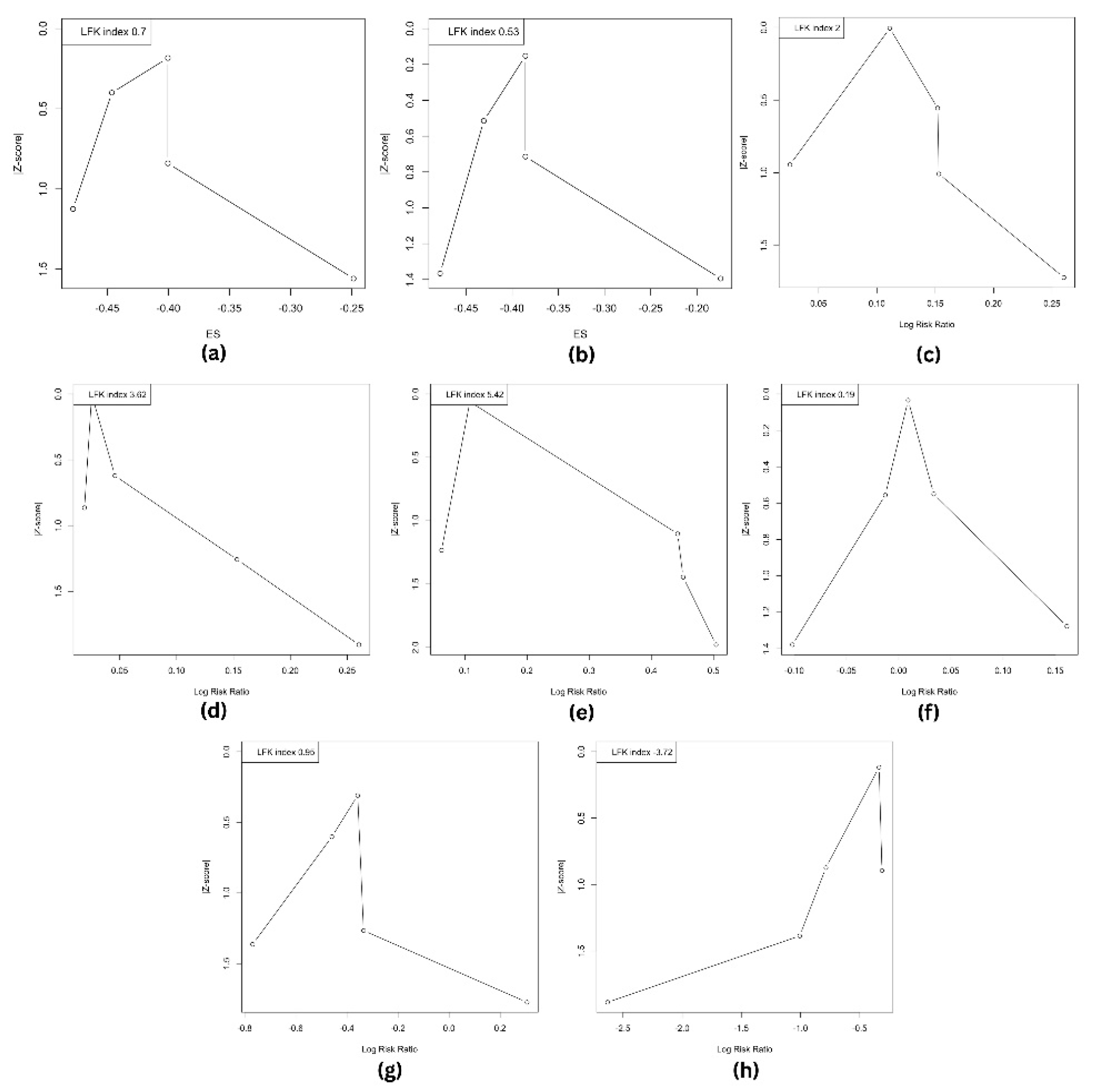
GRADE Assessment
Evidence certainty was appraised through the GRADE framework, with findings for OS and PFS summarized in . For OS in the ITT population, the pooled estimate was graded as high certainty, reinforcing confidence that the observed 34% relative risk reduction closely approximates the true treatment effect. This high rating was preserved in the PD-1 subgroup, where consistent direction and magnitude of benefit across trials supported a robust evidence base. By contrast, the PD-L1 subgroup was downgraded two levels to low certainty, driven by marked imprecision attributable to the limited trial base and correspondingly wide CIs. A parallel pattern emerged in the PD-L1-positive population: PD-1 inhibitors retained high certainty, whereas PD-L1 inhibitors fell to very low certainty, given reliance on a single trial with imprecise estimates.
Table 4. GRADE certainty of evidence for OS and PFS in the ITT and PD-L1 positive populations
Outcome | Population | No of participants (k) | Relative effects HR (95% CI) | Certainty | What happens |
|---|---|---|---|---|---|
OS (ITT) | Pooled | 3,302 (5) | 0.66 (0.60 to 0.73) | ⨁⨁⨁⨁ High | Immunochemotherapy reduces the hazard of death by 34% compared with chemotherapy alone. |
PD-1 | 2,122 (3) | 0.66 (0.62 to 0.70) | ⨁⨁⨁⨁ High | PD-1-based regimens consistently improve OS. | |
PD-L1 | 1,180 (2) | 0.67 (0.17 to 2.66) | ⨁⨁◯◯ Low | The effect of PD-L1 inhibitors on survival is uncertain due to imprecision and wide confidence intervals. | |
OS (PD-L1+) | PD-1 | 2,122 (3) | 0.66 (0.61 to 0.71) | ⨁⨁⨁⨁ High | PD-1 inhibitors improve survival among PD-L1-positive patients. |
PD-L1 | 770 (1) | 0.68 (0.59 to 0.78) | ⨁◯◯◯ Very low | Evidence is highly uncertain due to single-study evidence and imprecision. | |
PFS (ITT) | Pooled | 3,302 (5) | 0.68 (0.60 to 0.78) | ⨁⨁⨁⨁ High | Combination therapy reduces the risk of disease progression by 32%. |
PD-1 | 2,122 (3) | 0.65 (0.59 to 0.73) | ⨁⨁⨁⨁ High | PD-1 inhibitors significantly improve PFS. | |
PD-L1 | 1,180 (2) | 0.76 (0.20 to 0.78) | ⨁⨁◯◯ Low | Evidence remains uncertain due to wide confidence intervals. | |
PFS (PD-L1+) | PD-1 | 2,122 (3) | 0.65 (0.55 to 0.76) | ⨁⨁⨁⨁ High | PD-1 inhibitors significantly reduce disease progression in PD-L1-positive patients. |
PD-L1 | 770 (1) | 0.68 (0.55 to 0.84) | ⨁◯◯◯ Very low | Evidence is very uncertain due to limited data and imprecision. |
PD-L1: Programmed death-ligand 1, CR: Complete response, OS: Overall survival, PFS: Progression-free survival, ITT: Intention-to-treat, CI: Confidence interval, HR: Hazard ratio
In PFS, both the overall ITT and PD-1-specific estimates warranted high certainty, whereas PD-L1 inhibitors were again rated low in the ITT analysis and very low in the PD-L1-enriched cohort for analogous reasons: sparse data and wide intervals. Response-related outcomes, detailed in , generally received lower certainty grades than survival endpoints. ORR evidence was graded as low overall, suggesting a modest but uncertain enhancement in tumor response with immunochemotherapy; PD-1-specific evidence reached moderate certainty despite a nonsignificant subgroup estimate, while PD-L1 evidence was very low owing to heterogeneity and imprecision. Evidence for DCR and CR ranged from low to very low, reflecting inconsistency across studies, few contributing trials, and imprecise pooled estimates. PR and SD yielded moderate-to-low certainty, which is compatible with minimal or absent between-group differences. PD evidence was graded as very low: a consequence of extreme imprecision compounded by substantial inter-study inconsistency.
Discussion
This meta-analysis of five RCTs, encompassing 3,302 women with cervical cancer, demonstrates that adding PD-1/PD-L1 immune checkpoint inhibitors to platinum-based chemotherapy is associated with clinically meaningful improvements in key oncologic outcomes. Pooled analyses demonstrated significant improvements in OS and PFS with the addition of PD-1/PD-L1 inhibitors to chemotherapy. The combination therapy also enhanced ORRs, although moderate heterogeneity was observed across studies. CR was modestly increased (RR: 1.30, 95% CI: 1.00-1.70), while DCR and PR did not reach statistical significance. Assessment of DOI plots indicated no major publication bias for survival endpoints; however, asymmetry was observed for certain response outcomes, particularly DCR, CR, and PD, which warrants cautious interpretation. The survival benefit of PD-1/PD-L1 inhibitors combined with chemotherapy was generally consistent across most prespecified subgroups. OS benefit was evident in patients aged <65 years, those with ECOG 0-1, non-white patients, those with non-squamous histology, and those with persistent, recurrent, or metastatic disease; it was maintained regardless of bevacizumab use, study design, risk of bias, or publication year. PFS benefit was broadly observed across age groups, racial categories, PD-L1 expression levels (particularly CPS ≥10), chemotherapy backbone, and metastatic status.
Importantly, the survival advantage was primarily driven by PD-1-based regimens, while PD-L1 inhibitors showed less consistent effects. Overall, subgroup analyses support the robustness and generalizability of the treatment benefit. The tolerability profile of the immunochemotherapy combination was generally acceptable, with the majority of treatment-emergent adverse events classified as low grade. Notably, immune-mediated endocrine toxicities were significantly more prevalent in the experimental arm, particularly hyperthyroidism (OR: 3.75; 95% CI: 2.57-5.48) and hypothyroidism (OR: 3.29; 95% CI: 2.63-4.12), consistent with known effects of immune checkpoint inhibitors. Mild elevations in aspartate aminotransferase (OR: 1.51; 95% CI: 1.18-1.92) were also observed, as were leukopenia (OR: 1.26; 95% CI: 1.01-1.56), neutropenia (OR: 1.25; 95% CI: 1.03-1.53), and decreased appetite (OR: 1.28; 95% CI: 1.00-1.65). Decreased lymphocyte counts occurred less frequently in the intervention group (OR: 0.74; 95% CI: 0.56-0.97), possibly reflecting enhanced T-cell activity. For grade ≥3 adverse events, no significant differences were observed for most parameters, with the exception of severe appetite loss (OR: 3.16; 95% CI: 1.19-8.39). The addition of PD-1/PD-L1 inhibitors did not significantly increase the risk of severe hematologic, hepatic, or gastrointestinal toxicities, which supports the tolerability of the combination regimen.
Previous meta-analyses have reported pooled improvements in OS and PFS with the addition of immune checkpoint inhibitors to chemotherapy but did not stratify outcomes according to inhibitor class(). In contrast, the present meta-analysis provides a detailed indirect comparison between PD-1 and PD-L1 inhibitors, demonstrating that the observed survival advantage is predominantly driven by PD-1-based regimens. The magnitude of benefit is comparable (OS HR: 0.70; PFS HR: 0.69). Both analyses reported improved ORRs and increased immune-related adverse events. However, important differences in interpretation were observed. Previous meta-analyses analyzed PD-1/PD-L1 inhibitors as a single therapeutic group and reported increases in grade 3-5 adverse events and in serious adverse events, whereas the present study stratified outcomes by inhibitor class and found that survival benefits were primarily driven by PD-1 inhibitors, with less consistent effects observed for PD-L1 agents. While previous analyses reported a significant improvement in DCR, our pooled analysis did not confirm a statistically significant benefit in DCR. Overall, both analyses demonstrate similar survival efficacy, but differ in class-specific interpretation and emphasis on safety.
Subgroup analyses showed that although patients aged ≥65 derived significant PFS benefit, the OS improvement was not statistically significant, possibly reflecting age-related immunosenescence and comorbidities that limit durable immune activation(). In contrast, younger patients and those with ECOG 0-1 demonstrated clearer survival gains, likely because preserved immune competence, lower systemic inflammatory burden, and greater physiologic reserve enable more sustained antitumor immune responses following checkpoint blockade(). Racial differences in treatment responsiveness were also observed, which may reflect underlying variations in tumor mutational burden, immune microenvironment composition, and host genetic background across populations(). Such biologic heterogeneity could influence antigen presentation, T-cell priming, and immune checkpoint signaling, although these associations require further prospective validation. Efficacy also varied according to inhibitor class. PD-1 inhibitors, including pembrolizumab and cadonilimab, demonstrated consistent improvements in OS and PFS, whereas PD-L1 inhibitors, particularly durvalumab, did not demonstrate statistically significant survival benefits. This discrepancy may reflect mechanistic differences, as PD-1 blockade inhibits interactions with both PD-L1 and PD-L2, thereby producing broader immune reactivation compared with PD-L1 inhibition alone. PD-L1 expression status further modified the outcomes. Patients with intermediate CPS (1-10) experienced significant OS benefit, whereas those with CPS ≥10 or <1 showed only nonsignificant trends, suggesting that moderate PD-L1 expression may identify tumors with sufficient immune engagement to respond to checkpoint inhibition without representing profoundly immune-exhausted or immune-cold phenotypes(). These findings indicate that PD-L1 status may guide treatment selection, but it does not function as a definitive predictive biomarker. Clinical benefit was observed irrespective of bevacizumab use or metastatic status, indicating that checkpoint inhibition retains activity across diverse treatment backbones and disease burdens. Notably, outcomes appeared particularly favorable in patients receiving cisplatin-based chemotherapy or who had received prior chemoradiotherapy, which may reflect biological synergy. Cisplatin induces immunogenic cell death, enhances neoantigen release, and promotes antigen presentation(), while VEGF inhibition has been shown to normalize tumor vasculature and improve immune cell infiltration, thereby facilitating cytotoxic T-cell access to the tumor microenvironment(). Greater survival gains were also observed among patients with non-squamous histology and PRMC, potentially due to distinct genomic alterations and immune characteristics, including higher PD-L1 expression and differential tumor-immune interactions(, ). These biological differences may increase susceptibility to immune checkpoint blockade.
Several immunologic and molecular mechanisms may account for the greater efficacy observed with PD-1-based regimens. Mechanistically, PD-1-directed antibodies engage the receptor itself on T lymphocytes, thus abrogating co-inhibitory signaling through both PD-L1 and PD-L2(). By contrast, PD-L1-targeting antibodies selectively disrupt the PD-1/PD-L1 axis while leaving PD-L2-mediated signaling intact, potentially attenuating the breadth of T-cell reinvigoration(). Given that PD-L2 is frequently co-expressed with PD-L1 in cervical cancer, PD-1 blockade may provide broader relief from immune suppression within the tumor microenvironment(). Moreover, cytotoxic chemotherapy can promote immunogenic cell death and enhance tumor antigen release, thereby augmenting antigen presentation and synergizing with immune checkpoint blockade(). This combinatorial effect may further amplify effector T-cell activation and attenuate immunosuppressive regulatory T-cell activity in the tumor microenvironment(). Collectively, these mechanisms suggest that PD-1 inhibitors may induce a more robust and sustained antitumor immune response than PD-L1 inhibitors, potentially contributing to the more pronounced survival benefit observed with PD-1 blockade in cervical cancer.
Our findings indicate that PD-1-based immunochemotherapy is associated with improved survival in patients with advanced cervical cancer. The magnitude and consistency of OS and PFS benefits support the robustness and clinical relevance of the observed survival gains, despite variability in study characteristics. Notably, the superiority signal was predominantly driven by PD-1 inhibitors, reinforcing the biological rationale for broader blockade of the PD-1 pathway and suggesting a potential class advantage over PD-L1 inhibitors. While cross-trial comparisons must be interpreted cautiously, the consistent lack of a statistically significant survival benefit from PD-L1 inhibitors in pooled analyses raises important questions about mechanistic differences and optimal checkpoint-targeting strategies. These findings underscore the urgent need for head-to-head trials. Taken together, our results argue for prioritizing PD-1-based combination regimens for appropriately selected patients and moving beyond uniform treatment approaches toward precision immunochemotherapy.
Study Limitations
Several limitations of this meta-analysis should be acknowledged. The evidence base was limited to five RCTs, including three PD-1-based studies and two PD-L1-based studies, which constrains the precision of pooled estimates and necessitates cautious interpretation, particularly regarding PD-L1 inhibitors, which did not demonstrate a statistically significant benefit. Variability in trial design and patient characteristics, including differences in bevacizumab use, baseline disease burden, and prior treatment exposure, may have contributed to heterogeneity across studies. Variation in follow-up duration further the ability to assess the long-term efficacy and safety of immunochemotherapy. The absence of quality-of-life and patient-reported outcome data precluded evaluation of treatment effects on functional status and symptom burden, outcomes of particular relevance in cervical cancer. Although no substantial publication bias was detected for survival outcomes, the possibility of bias could not be fully excluded for response-related endpoints, raising concerns regarding small-study effects or selective outcome reporting.
Conclusion
In summary, augmenting platinum-based chemotherapy with PD-1/PD-L1 checkpoint inhibitors confers meaningful survival and response benefits in cervical cancer, with PD-1-targeting regimens accounting for the predominant therapeutic signal. The combination exhibits an acceptable toxicity profile and constitutes a viable treatment option for appropriately selected patients. However, the small number of available trials and inter-study heterogeneity in design and patient characteristics necessitate interpretive caution. Adequately powered, biomarker-stratified randomized trials are warranted to optimize patient selection and to delineate whether the observed class-level differences translate into differential clinical benefit. Extended follow-up and incorporation of patient-reported outcomes will be essential to better define the long-term risk-benefit profile of immunochemotherapy in cervical cancer.
Footnotes
Authorship Contributions
Concept: F.P.S.W., A.M.T.S., P.C.N.B.S., A.A.Z.K., Design: F.P.S.W., A.M.T.S., P.C.N.B.S., A.A.Z.K., Data Collection or Processing: F.P.S.W., A.M.T.S., I.P.K.A.A., Analysis or Interpretation: F.P.S.W., I.P.K.A.A., I.G.W.W.W., Literature Search: F.P.S.W., A.M.T.S., Writing: F.P.S.W., A.M.T.S., P.C.N.B.S., A.A.Z.K., R.N.R., W.W., I.G.W.W.W., N.W.A.
Conflict of Interest: No conflict of interest was declared by the authors.
Financial Disclosure: The authors declared that this study received no financial support.
Declaration of Generative AI and AI-Assisted Technologies in the Writing Process: During the preparation of this work, the author(s) utilized OpenAI’s ChatGPT and Anthropic’s Claude to improve the language and clarity of the manuscript; after carefully reviewing and editing the content, the author(s) took full responsibility for the publication’s content.
References
Sung H, Ferlay J, Siegel RL, Laversanne M, Soerjomataram I, Jemal A, et al. Global cancer statistics 2020: GLOBOCAN estimates of incidence and mortality worldwide for 36 cancers in 185 countries. CA Cancer J Clin. 2021;71:209-49.
Bray F, Laversanne M, Sung H, Ferlay J, Siegel RL, Soerjomataram I, et al. Global cancer statistics 2022: GLOBOCAN estimates of incidence and mortality worldwide for 36 cancers in 185 countries. CA Cancer J Clin. 2024;74:229-63.
Arbyn M, Weiderpass E, Bruni L, de Sanjosé S, Saraiya M, Ferlay J, et al. Estimates of incidence and mortality of cervical cancer in 2018: a worldwide analysis. Lancet Glob Health. 2020;8:e191-203. Erratum in: Lancet Glob Health. 2022;10:e41.
International Agency for Research on Cancer (IARC). Cancer tomorrow: trends [Internet]. Lyon: International Agency for Research on Cancer; 2026. Available from: https://gco.iarc.who.int/tomorrow/en/dataviz/trends?multiple_populations=1&cancers=23
Fowler JR, Maani EV, Dunton CJ, Gasalberti DP, Jack BW. Cervical cancer. 2023. In: StatPearls [Internet]. Treasure Island (FL): StatPearls Publishing; 2023.
Li J, Liu G, Luo J, Yan S, Ye P, Wang J, et al. Cervical cancer prognosis and related risk factors for patients with cervical cancer: a long-term retrospective cohort study. Sci Rep. 2022;12:13994.
George IA, Chauhan R, Dhawale RE, Iyer R, Limaye S, Sankaranarayanan R, et al. Insights into therapy resistance in cervical cancer. Advances in Cancer Biology - Metastasis. 2022;6:100074.
Gandhi L, Rodríguez-Abreu D, Gadgeel S, Esteban E, Felip E, De Angelis F, et al.; KEYNOTE-189 Investigators. Pembrolizumab plus chemotherapy in metastatic non-small-cell lung cancer. N Engl J Med. 2018;378:2078-92.
Chung HC, Ros W, Delord JP, Perets R, Italiano A, Shapira-Frommer R, et al. Efficacy and safety of pembrolizumab in previously treated advanced cervical cancer: results from the phase II KEYNOTE-158 study. J Clin Oncol. 2019;37:1470-8.
Monk BJ, Sill MW, McMeekin DS, Cohn DE, Ramondetta LM, Boardman CH, et al. Phase III trial of four cisplatin-containing doublet combinations in stage IVB, recurrent, or persistent cervical carcinoma: a Gynecologic Oncology Group study. J Clin Oncol. 2009;27:4649-55.
Thigpen T, Shingleton H, Homesley H, LaGasse L, Blessing J. cis-Dichlorodiammineplatinum(II) in the treatment of gynecologic malignancies: phase II trials by the Gynecologic Oncology Group. Cancer Treat Rep. 1979;63:1549-55.
Bonomi P, Blessing JA, Stehman FB, DiSaia PJ, Walton L, Major FJ. Randomized trial of three cisplatin dose schedules in squamous-cell carcinoma of the cervix: a Gynecologic Oncology Group study. J Clin Oncol. 1985;3:1079-85.
Boussios S, Seraj E, Zarkavelis G, Petrakis D, Kollas A, Kafantari A, et al. Management of patients with recurrent/advanced cervical cancer beyond first line platinum regimens: where do we stand? A literature review. Crit Rev Oncol Hematol. 2016;108:164-74.
Frenel JS, Le Tourneau C, O’Neil B, Ott PA, Piha-Paul SA, Gomez-Roca C, et al. Safety and efficacy of pembrolizumab in advanced, programmed death ligand 1-positive cervical cancer: results from the phase Ib KEYNOTE-028 trial. J Clin Oncol. 2017;35:4035-41.
Luo D, Yu Y, Wang Q, Peng T, Li C, Zhang W, et al. The benefit and risk of addition of PD-1/PD-L1 inhibitors to chemotherapy for advanced cervical cancer: a phase 3 randomized controlled trials based meta-analysis. BMC Cancer. 2025;25:450.
Li ZR, Wang YF, Zuo CR, Men JS, Li XY, Luo P, et al. Unlocking the potential of immune checkpoint inhibitors in advanced cervical cancer: a meta-analysis and systematic review. BMC Cancer. 2025;25:863.
Page MJ, McKenzie JE, Bossuyt PM, Boutron I, Hoffmann TC, Mulrow CD, et al. The PRISMA 2020 statement: an updated guideline for reporting systematic reviews. BMJ. 2021;372:n71.
Ouzzani M, Hammady H, Fedorowicz Z, Elmagarmid A. Rayyan-a web and mobile app for systematic reviews. Syst Rev. 2016;5:210.
McGuinness LA, Higgins JPT. Risk-of-bias VISualization (robvis): an R package and Shiny web app for visualizing risk-of-bias assessments. Res Synth Methods. 2021;12:55-61.
Goldet G, Howick J. Understanding GRADE: an introduction. J Evid Based Med. 2013;6:50-54.
Furuya-Kanamori L, Barendregt JJ, Doi SAR. A new improved graphical and quantitative method for detecting bias in meta-analysis. Int J Evid Based Healthc. 2018;16:195-203.
Colombo N, Dubot C, Lorusso D, Caceres MV, Hasegawa K, Shapira-Frommer R, et al.; KEYNOTE-826 Investigators. Pembrolizumab for persistent, recurrent, or metastatic cervical cancer. N Engl J Med. 2021;385:1856-67.
Lorusso D, Xiang Y, Hasegawa K, Scambia G, Leiva M, Ramos-Elias P, et al.; ENGOT-cx11/GOG-3047/KEYNOTE-A18 investigators. Pembrolizumab or placebo with chemoradiotherapy followed by pembrolizumab or placebo for newly diagnosed, high-risk, locally advanced cervical cancer (ENGOT-cx11/GOG-3047/KEYNOTE-A18): overall survival results from a randomised, double-blind, placebo-controlled, phase 3 trial. Lancet. 2024;404:1321-32. Erratum in: Lancet. 2024;404:1730.
Monk BJ, Toita T, Wu X, Vázquez Limón JC, Tarnawski R, Mandai M, et al. Durvalumab versus placebo with chemoradiotherapy for locally advanced cervical cancer (CALLA): a randomised, double-blind, phase 3 trial. Lancet Oncol. 2023;24:1334-48.
Oaknin A, Gladieff L, Martínez-García J, Villacampa G, Takekuma M, De Giorgi U, et al.; ENGOT-Cx10–GEICO 68-C–JGOG1084–GOG-3030 Investigators. Atezolizumab plus bevacizumab and chemotherapy for metastatic, persistent, or recurrent cervical cancer (BEATcc): a randomised, open-label, phase 3 trial. Lancet. 2024;403:31-43.
Wu X, Sun Y, Yang H, Wang J, Lou H, Li D, et al. Cadonilimab plus platinum-based chemotherapy with or without bevacizumab as first-line treatment for persistent, recurrent, or metastatic cervical cancer (COMPASSION-16): a randomised, double-blind, placebo-controlled phase 3 trial in China. Lancet. 2024;404:1668-76.
Goronzy JJ, Weyand CM. Immune aging and autoimmunity. Cell Mol Life Sci. 2012;69:1615-23.
Qin W, Yang L, Fan B, Zou B, Duan Y, Li B, et al. Association between immune-related adverse events and the efficacy of PD-1 inhibitors in advanced esophageal cancer. Front Immunol. 2022;13:931429.
Yao S, Ambrosone CB, Osarogiagbon RU, Morrow GR, Kamen C. A biopsychosocial model to understand racial disparities in the era of cancer immunotherapy. Trends Cancer. 2023;9:6-8.
Chen T, Wang M, Chen Y, Cao Y, Liu Y. Advances in predictive biomarkers associated with immunotherapy in extensive-stage small cell lung cancer. Cell Biosci. 2024;14:117.
Zu C, Zhong Y, Wu S, Wang B. Chemotherapy liberates a broadening repertoire of tumor antigens for TLR7/8/9-mediated potent antitumor immunity. Cancers (Basel). 2025;17:3277.
Bocca P, Di Carlo E, Caruana I, Emionite L, Cilli M, De Angelis B, et al. Bevacizumab-mediated tumor vasculature remodelling improves tumor infiltration and antitumor efficacy of GD2-CAR T cells in a human neuroblastoma preclinical model. Oncoimmunology. 2017;7:e1378843.
Lu Z, Fan P, Huo W, Feng Y, Wang R. Genomic profiles and their relationships with clinical characteristics and immune features in cervical cancer. Transl Oncol. 2024;44:101923. Erratum in: Transl Oncol. 2024;47:102037.
Gennigens C, Jerusalem G, Lapaille L, De Cuypere M, Streel S, Kridelka F, et al. Recurrent or primary metastatic cervical cancer: current and future treatments. ESMO Open. 2022;7:100579.
Chen Y, Pei Y, Luo J, Huang Z, Yu J, Meng X. Looking for the optimal PD-1/PD-L1 inhibitor in cancer treatment: a comparison in basic structure, function, and clinical practice. Front Immunol. 2020;11:1088.
Parvez A, Choudhary F, Mudgal P, Khan R, Qureshi KA, Farooqi H, et al. PD-1 and PD-L1: architects of immune symphony and immunotherapy breakthroughs in cancer treatment. Front Immunol. 2023;14:1296341.
Rotman J, den Otter LAS, Bleeker MCG, Samuels SS, Heeren AM, Roemer MGM, et al. PD-L1 and PD-L2 expression in cervical cancer: regulation and biomarker potential. Front Immunol. 2020;11:596825.
Li C, Qi X, Yan M. Chemotherapy-induced immunogenic cell death in combination with ICIs: a brief review of mechanisms, clinical insights, and therapeutic implications. Front Pharmacol. 2025;16:1572195.
Heeren AM, Rotman J, Stam AGM, Pocorni N, Gassama AA, Samuels S, et al. Efficacy of PD-1 blockade in cervical cancer is related to a CD8 + FoxP3 + CD25 + T-cell subset with operational effector functions despite high immune checkpoint levels. J Immunother Cancer. 2019;7:43.
Supplementary Materials
Supplementary File 1-9
Download