
Abstract
High-intensity focused ultrasound (HIFU) is a non-surgical and noninvasive treatment modality that depends on external ultrasound energy sources that induce focused mass ablation and protein degeneration in the treatment area via thermal energy penetration under the intact skin. We aim in our study to collectively evaluate the safety of HIFU for the treatment of different obstetric and gynecological diseases in the literature. We searched PubMed, Scopus, and Science Direct databases, without restriction on date or language, from the inception of these databases until January 20, 2024. We also examined the references of the included studies in the Mendeley archive for eligible articles. We found a total of 706 studies. After the screening and selection process, 56 participants were included. Our dichotomous outcomes were pooled in our single-arm meta-analysis as risk ratio (RR) and with 95% confidence interval (CI) while our continuous outcomes were pooled as mean change and 95% CIs. Fixed- or random-effects models were applied depending on the heterogeneity detected. Our systematic review and meta-analysis included 56 studies including 11.740 patients. Depending on the Society of Interventional Radiology (SIR) classification for adverse effects. The results of this meta-analysis for the type A category that did not require clinical intervention found that pain in the treatment site estimated RR with 95% CI: 0.61 (0.33, 0.89), abnormal vaginal discharge 0.16 (0.073, 0.24), low-grade fever (<38 °C) 0.005 (0.002, 0.009). Sensory abnormalities of the lower limbs were examined in 3390 individuals and observed in only 19 patients who experienced gradual relief of symptoms within one month after treatment. Regarding SIR type B, 99 of a total of 6.437 patients had small vesicles and superficial burns with pooled RR and 95% CI: 0.012 (0.007, 0.018). In terms of groin or perianal and lower abdominal pain, our RRs with 95% CIs were 0.1 (0.067, 0.13) and 0.38 (0.25, 0.51). However, vaginal bleeding was detected in only 32 out of a total of 3.017. Major adverse events like lumber disc herniation, thrombocytopenia, and renal failure, were unmentionable. Additionally, our included studies did not record any deaths. HIFU, either alone or in combination with oxytocin or any other enhancing agent, is safe for patients with different gynecological and obstetric diseases. In terms of efficacy, it showed promising results compared with traditional treatment lines. To our knowledge, we are the first and most comprehensive meta-analysis in the literature that has studied the different safety outcomes related to HIFU as a treatment modality for different obstetric and gynecological diseases with a very large sample size, making our evidence strong and less attributed to errors.
Keywords: HIFU, ectopic pregnancy, endometriosis, gestational trophoblastic diseases, adenomyosis
Introduction
High-intensity focused ultrasound (HIFU) is a newly discovered non-invasive modality used to treat various obstetric and gynecological diseases. Based on its high ability to focus thermal energy and ultrasonic waves at a targeted location, it is used for local ablation of tumor masses like uterine myomas and fibroid masses. Recently, it gained confidence in the treatment of adenomyosis, gestational trophoblastic disease, endometriosis, and ectopic pregnancy (EP)(, ).
Adenomyosis is defined as the growth of ectopic endometrial tissues in the myometrium caused by various factors. It commonly occurs during the childbearing period. It manifests as menorrhagia, dysmenorrhea, and uterine enlargement. Surgery or medication is a treatment option for this disease. The only curative treatment is hysterectomy(, ).
Endometriosis is defined as the presence of endometrial glands outside the uterus, and it mainly affects females during the reproductive period. However, endometriosis is a benign disorder that tends to propagate, invade, and proliferate under the effect of female hormones, and it is treated either by surgical excision or medication(, ).
Gestational trophoblastic neoplasia (GTN) is a condition affecting human placental trophoblastic cells that usually occurs secondary to hydatidiform mole and is characterized by abnormal proliferation of these cells with an increase in serum beta-human chorionic gonadotropin (β-hCG) levels. Chemotherapy is the first-line treatment for GTN. However, surgery may be an additional option for high-risk, chemoresistant, or unsuitable cases(, ).
EP refers to the implantation of the embryo in any site rather than the endometrial cavity(). Tubal pregnancy is the most common type of EP and is associated with the highest mortality rate(). HIFU causes lesion ablation through thermal and cavitation effects. It is a non-invasive, safe, and effective treatment in oncology().
With HIFU’s broad application in the treatment of uterine fibroids, osteosarcoma, liver cancer, and other solid tumors, it gained interest from patients and physicians for the treatment of the following adenomyosis, EP, endometriosis, and gestational trophoblastic diseases(, ). Therefore, in our study, we aimed to thoroughly compile the existing literature to investigate the safety of HIFU as an intriguing solution for different obstetric and gynecological diseases.
Methods
Our study design closely adheres to the latest guidelines reported in the Cochrane Handbook for Systematic Reviews of Interventions. Moreover, we followed the Preferred Reporting Items for Systematic Reviews and Meta-analyses (PRISMA) statement guidelines for systematic review and meta-analysis(, ).
Literature Search
A comprehensive search was conducted across the following databases PubMed/MEDLINE, Scopus, and ScienceDirect. This meticulous search included articles published from inception until January 20, 2024. Additionally, we examined the reference lists of eligible articles and previous meta-analyses to identify any citations related to our research topic. Our search strategy was a combination of the following search terms: (HIFU and EP) Or (HIFU and endometriosis) Or (HIFU and gestational trophoblastic diseases) Or (HIFU and adenomyosis).
Eligibility Criteria
Two reviewers independently examined all retrieved references and eligible articles. Our Inclusion criteria were based on the following characteristics: Patients who experienced HIFU and had adenomyosis or EP or gestational trophoblastic diseases or endometriosis, studies where individuals were subjected to HIFU application, and studies revealing the safety outcomes of HIFU by counting the number of patients who experienced side effects due to HIFU and categorizing the side effects according to the committee.
Numerous studies were excluded from our analysis for the following reasons: 1) studies on animals; 2) articles not written in English; 3) only abstracts available; and 4) studies lacking outcome data.
Data Gathering
Data for this systematic review and meta-analysis were extracted in specific electronic offline sheets, capturing specific information from each included study. Extracted data included study ID, study design and publication year, total sample size, geographic distribution of the study, mean participant age, gender distribution, duration of follow-up, conclusions, and primary outcomes.
Assessment of Risk of Bias
Our case reports and cohort quality were evaluated using Murad et al.() tool. This tool comprises the following parameters: selection, ascertainment, causality, and reporting. From a total score of eight, we assigned the quality of assessed studies as good (>6.5, fair, or poor if matched >5-6.5, or less than 5, respectively. National Institutes of Health() used for assessment of some of our cohort studies. The evaluation process was based on scores to categorize the quality of our included studies as “good”, “fair”, or “poor”. Moreover, any discrepancies were resolved by discussion with a third assessor.
Data Synthesis
Our dichotomous data were pooled in this single-arm meta-analysis as risk ratio (RR) and with 95% confidence interval (CI) while our continuous outcomes were pooled as mean change and 95% CIs. Fixed- or random-effects models were applied depending on the heterogeneity detected. We conducted a single-arm meta-analysis. We first apply a random effect model and then, according to the degree of heterogeneity, we choose between random and fixed models. We express statistical heterogeneity using the I2 statistics chi-squared test. We also used Open-Meta-Analyst software for all statistical analyses.
Results
Literature Search Results
Our search across distinct databases yielded 706 studies. Subsequently, after eliminating duplicate studies, 584 studies were included for screening. A meticulous review of the titles and abstracts led to the identification of 87 articles suitable for full-text evaluation. Finally, a total of 56 articles were included in our systematic review and meta-analysis. A visual representation of the study selection process is presented in the PRISMA flow diagram in .
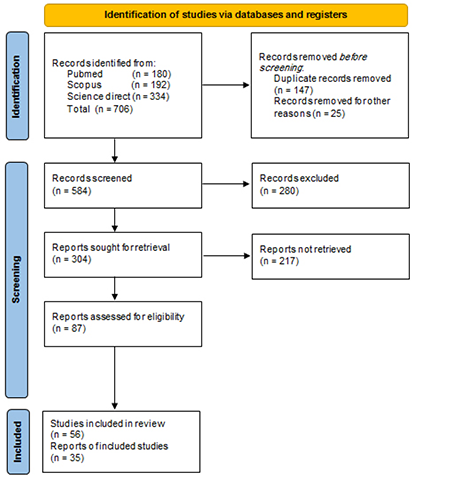
PRISMA: Preferred Reporting Items for Systematic Reviews and Meta-analyses
Characteristics of the Included Studies
Our systematic review and meta-analysis included 56 studies(, -), encompassing 11.740 patients. Regarding geographic distribution, the majority of our studies were conducted in China from 2011 to 2023. The mean age was 39 years old. While the mean body mass index of our population ranged from 21 to 23 kg/m2. The studies in this systematic review evaluate HIFU for the treatment of the following disorder: Adenomyosis, endometriosis, gestational trophoblastic diseases, and EP. The baseline characteristics, summary, and citations of our included studies are comprehensively discussed in .
Table 1. Baseline characteristics, summary, and citations of our included studies
First author’s name | Year of publication | Title | Type of study | Location of study |
|---|---|---|---|---|
Jeng et al.(27) | 2020 | 500 Cases of high-intensity focused ultrasound (HIFU) Ablated Uterine Fibroids and Adenomyosis | Retrospective cross-sectional analysis | Taiwan |
Shui et al.(31) | 2015 | High-intensity focused ultrasound (HIFU) for adenomyosis: Two-year follow-up results | This retrospective two-year follow-up study | Chongqing, China |
Yao et al.(28) | 2021 | Microbubble contrast agent SonoVue combined with oxytocin improves theefficiency of high-intensity focused ultrasound ablation for adenomyosis | Prospective randomized controlled trial | Kunming, China |
Xu et al.(29) | 2023 | Comparison of high-intensity focused ultrasound for the treatment of internaland external adenomyosis based on magnetic resonance imaging classification | Retrospective study | Chongqing, China |
Li et al.(26) | 2021 | High-intensity focused ultrasound in the management of adenomyosis:long-term results from a single center | Retrospective analysis | Changsha, China |
Gong et al.(20) | 2017 | High intensity focused ultrasound treatment of adenomyosis: The relationship between the features of magnetic resonance imaging on T2 weighted images and the therapeutic efficacy | Retrospective study | China |
Zhao et al.(73) | 2023 | High intensity focused ultrasound treatment for adenomyosis: comparison ofefficacy based on MRI features | Retrospective study | Suining, China |
Wei et al.(38) | 2023 | Comparison of pregnancy outcomes in infertile patients with different types ofadenomyosis treated with high-intensity focused ultrasound | Retropectve review | Guangxi, China |
Feng et al.(36) | 2017 | Safety of ultrasound-guided high-intensity focused ultrasound ablation for diffuse adenomyosis: A retrospective cohort study | Retrospective cohort study | Chongqing, China |
Zhou et al.(35) | 2011 | Ultrasound-guided high-intensity focused ultrasound ablation for adenomyosis: the clinical experience of a single center | Prospective clinical trial | Chongqing, China |
Gong et al.(25) | 2022 | Evaluation of high intensity focused ultrasound treatment for different types ofadenomyosis based on magnetic resonance imaging classification | Retrospective study | Chongqing, China |
Lee et al.(23) | 2018 | Comparison of effectiveness of epidural analgesia and monitored anesthesiacare for high-intensity focused ultrasound treatment of adenomyosis | Retrospective case-control study | Seoul, Republic of Korea |
Yu et al.(24) | 2017 | Treatment of cornual pregnancy in a patient with adenomyosis by high-intensity focused ultrasound (HIFU) ablation | Case report | Shandong, China |
Yu et al.(22) | 2023 | Factors influencing USgHIFU ablation for adenomyosis with NPVR 50% | Retrospective study | Chongqing, China |
Lee et al.(21) | 2015 | Ultrasound-guided high-intensity focused ultrasound treatment for uterine fibroid & adenomyosis: A single center experience from the Republic of Korea | Retrospective analysis | Republic of Korea |
Hong et al.(33) | 2019 | Complication Following Ultrasound-Guided High-Intensity Focused Ultrasound for the Treatment of Uterine Adenomyosis: Case Report of CT Imaging Features | Case report of CT imaging features | Korea |
Xiong et al.(34) | 2015 | Ultrasound-guided high-intensity focused ultrasound (USgHIFU) ablation for the treatment of patients with adenomyosis andprior abdominal surgical scars: A retrospective study | Retrospective study | Chongqing, China |
Jingqi et al.(18) | 2018 | Clinical Usefulness of the Microbubble Contrast Agent SonoVue in Enhancing the Effects of High-Intensity Focused Ultrasound for the Treatment of Adenomyosis | Prospective study | Chongqing, China |
Cheng et al.(19) | 2015 | Contrast-Enhanced Ultrasound for Evaluation of High-Intensity Focused Ultrasound Treatment of Benign Uterine Diseases | Retrospective study | China |
Fan et al.(32) | 2012 | Feasibility of MRI-guided high intensity focused ultrasound treatment for adenomyosis | Prospective and clinical trail | Chongqing, China |
Liu et al.(30) | 2023 | High Intensity Focused Ultrasound Ablation for Juvenile Cystic Adenomyosis: Two Case Reports and Literature Review | Case studies and literature review | Suining, china |
Qu et al.(39) | 2022 | Long-term outcome of ultrasound-guided focused ultrasound ablation for gestational trophoblastic neoplasia in the cesarean scar: a case report | Case report | Chongqing, China |
Liu et al.(7) | 2023 | High-intensity focused ultrasound as a pretreatment combined with hysteroscopic resection for gestational trophoblastic neoplasia with chemotherapy intolerance: a case report | Case report | China |
She et al.(40) | 2021 | High-intensity focused ultrasound ablation as an adjuvant surgical salvage procedure in gestational trophoblastic neoplasia chemotherapy with chemoresistance or recurrence: two case reports | Case report | Zunyi City, China |
Hu et al.(41) | 2022 | Exploring the Diagnostic Performance of Magnetic Resonance Imaging in Ultrasound-Guided High-Intensity Focused Ultrasound Ablation for Abdominal Wall Endometriosis | Prospective | China |
Liu et al.(74) | 2023 | Safety and efficacy of microwave ablation for abdominal wall endometriosis: A retrospective study | Retrospective | China |
Philip et al.(42) | 2020 | Transrectal high-intensity focused ultrasound (HIFU) for management of rectosigmoid deep infiltrating endometriosis: results of Phase-I clinical trial | Prospective | France |
Shi et al.(43) | 2020 | High-Intensity Focused Ultrasound in the Treatment of Abdominal Wall Endometriosis | Retrospective | China |
Yang and Zhang(75) | 2023 | Efficacy and safety of high-intensity focused ultrasound ablation for rectus abdominis endometriosis: a 7-year follow-up clinical study | Retrospective | China |
Luo et al.(77) | 2017 | Ultrasound-guided high-intensity focused ultrasound treatment for abdominal wall endometriosis: a retrospective study | Retrospective | China |
Zhu et al.(47) | 2017 | A comparison between high-intensity focused ultrasound and surgical treatment for the management of abdominal wall endometriosis | Retrospective | China |
Xiao-Ying et al.(76) | 2019 | Clinical analysis of high-intensity focused ultrasound ablation for abdominal wall endometriosis: a 4-year experience at a specialty gynecological institution | Retrospective | China |
Zhao et al.(78) | 2018 | Comparison of ultrasound-guided high-intensity focused ultrasound ablation and surgery for abdominal wall endometriosis | Retrospective | China |
Lee et al.(46) | 2019 | Abdominal wall endometriosis treatment by ultrasound-guided high-intensity focused ultrasound ablation: a case report | Case report | Korea |
Nguyen(79) | 2020 | Magnetic Resonance Imagingguided Highintensity Focused Ultrasound Ablation for Endometriosis of the Abdominal Wall | Case report | Vietnam |
Wang et al.(44) | 2021 | The safety of echo contrast-enhanced ultrasound in high-intensity focused ultrasound ablation for abdominal wall endometriosis: a retrospective study | Retrospective | China |
Wang et al.(45) | 2011 | Ultrasound-guided high-intensity focused ultrasound treatment for abdominal wall endometriosis: Preliminary result | Prospective | China |
Stehouwer et al.(80) | 2018 | Magnetic Resonance Imaging Guided High Intensity Focused Ultrasound is a Non-Invasive Treatment Modality for Patients with Abdominal Wall Endometriosis | Case report | Netherlands |
Wang et al.(53) | 2022 | High-intensity focused ultrasound compared with uterine artery chemoembolization with methotrexate for the management of cesarean scar pregnancy | Retrospective cohort | China |
Hong et al.(48) | 2017 | Outcome of high-intensity focused ultrasound and uterine artery embolization in the treatment and management of cesarean scar pregnancy | Retrospective cohort | China |
Huang et al.(49) | 2022 | Clinical analysis of high-intensity focused ultrasound (HIFU) combined with hysteroscopy-guided suction curettage (HGSC) in patients with cervical pregnancy | Retrospective cohort | China |
Liu et al.(51) | 2020 | Clinical outcome of high-intensity focused ultrasound as the preoperative management of cesarean scar pregnancy | Prospective cohort | China |
Liu et al.(50) | 2022 | Clinical efficacy and safety of high-intensity focused ultrasound (HIFU) ablation in treatment of cesarean scar pregnancy (CSP) I and II | Retrospective cohort | China |
Peng et al.(52) | 2022 | Analysis of the type of cesarean scar pregnancy impacted on the effectiveness and safety of high intensity focused ultrasound combined with ultrasound-guided suction curettage treatment | Retrospective cohort | China |
Zhu et al.(13) | 2015 | High-Intensity Focused Ultrasound Combined with Suction Curettage for the Treatment of Cesarean Scar Pregnancy | Prospective cohort | China |
Yuan et al.(54) | 2021 | Focused Ultrasound Ablation Surgery combined with ultrasound-guided suction curettage in the treatment and management of Cesarean Scar Pregnancy | Retrospective cohort | China |
Xiao et al.(55) | 2017 | Cesarean Scar Pregnancy: Comparing the Efficacy And Tolerability Of Treatment With High-Intensity Focused Ultrasound And Uterine Artery Embolization | Retrospective cohort | China |
Xiao et al.(81) | 2014 | Cesarean scar pregnancy: noninvasive and effective treatment with high intensity focused ultrasound | Prospective cohort | China |
Peng et al.(56) | 2022 | High-intensity focused ultrasound ablation combined with systemic methotrexate treatment of intramural ectopic pregnancy: A case report | Case report | China |
Li et al.(57) | 2022 | Comparison of high-intensity focused ultrasound ablation and uterine artery embolization in the management of cervical pregnancy | Prospective cohort | China |
He et al.(58) | 2011 | A preliminary clinical study on high-intensity focused ultrasound therapy for tubal pregnancy | Prospective cohort | China |
Huang et al.(59) | 2014 | High-intensity focused ultrasound combined with dilatation and curettage for Cesarean scar pregnancy | Case report | China |
Jiang et al.(60) | 2019 | The treatment of cervical pregnancy with high-intensity focused ultrasound followed by suction curettage: report of three cases | Case report | China |
Yu et al.(24) | 2017 | Treatment of cornual pregnancy in a patient with adenomyosis by high-intensity focused ultrasound (HIFU) ablation | Case report | China |
Mu et al.(61) | 2022 | Evaluation of the treatment of high intensity focused ultrasound combined with suction curettage for exogenous cesarean scar pregnancy | Retrospective cohort | China |
Liu et al.(7) | 2023 | High-intensity focused ultrasound as a pretreatment combined with hysteroscopic resection for gestational trophoblastic neoplasia with chemotherapy intolerance: a case report | Case report | China |
Risk of Bias Assessment
Our 14 case report studies were judged from good to fair according to the Murad et al.(), tool, while the other 42 included cohort studies were designed as either retrospective or prospective cohorts and all showed fair quality. Risk of bias assessment tablesare presented in .
Table 2. Showed some studies that report major adverse events and their number
Study ID | Foot drop | Thrombocytopenia | Abdominal hernia | Lumbar disc herniation | Acute renal failure | Bowel perforation |
Jeng et al.(27) | NR | 1/546 | 0/546 | NR | 4/546 | 1/546 |
Hong et al.(33) | NR | 1/1 | 1/1 | NR | 1/1 | 1/1 |
Lee et al.(46) | 1/618 | NR | NR | 1/618 | NR | NR |
Table 3. NIH quality assessment tool for observational cohort and cross-sectional studies
N | ID | Quality rating: good (11-14 points) or fair (7.5-10.5 points) or poor (0-7 points), Yes = 1/No = 0.5/NR & NA & CD = 0 |
|---|---|---|
1 | Hu et al.(41) | Fair |
2 | Hong et al.(48) | Fair |
3 | Huang et al.(49) | Fair |
4 | Liu et al.(51) | Fair |
5 | Liu et al.(50) | Fair |
6 | Peng et al.(52) | Fair |
7 | Zhu et al.(13) | Fair |
8 | Yuan et al.(54) | Fair |
9 | Xiao et al.(55) | Fair |
10 | Xiao et al.(81) | Fair |
12 | Li et al.(57) | Fair |
13 | He et al.(58) | Fair |
17 | Mu et al.(61) | Fair |
Table 4. Included studies for adenomyosis
ID | Quality rating: good (11-14 points) or fair (7.5-10.5 points) or poor (0-7 points), Yes = 1/No = 0.5/NR & NA & CD = 0 |
|---|---|
Jeng et al.(27) | Good |
Shui et al.(31) | Fair |
Yao et al.(28) | Fair |
Xu et al.(29) | Fair |
Li et al.(26) | Fair |
Gong et al.(20) | Good |
Zhao et al.(73) | Fair |
Wei et al.(38) | Fair |
Feng et al.(36) | Fair |
Zhou et al.(35) | Fair |
Gong et al.(25) | Fair |
Lee et al.(23) | Fair |
Yu et al.(22) | Fair |
Lee et al.(21) | Fair |
Xiong et al.(34) | Fair |
Jingqi et al.(18) | Fair |
Cheng et al.(19) | Fair |
Table 5. ROB of endometriosis
ID | Quality rating: good (11-14 points) or fair (7.5-10.5 points) or poor (0-7 points), Yes = 1/No = 0.5/ NR & NA & CD = 0 |
|---|---|
Hu et al.(41) | Fair |
Liu et al.(50) | Fair |
Philip et al.(42) | Fair |
Shi et al.(43) | Fair |
Yang and Zhang(75) | Fair |
Luo et al.(77) | Fair |
Zhu et al.(47) | Fair |
Xiao-Ying et al.(76) | Good |
Zhao et al.(78) | Fair |
Wang et al.(44) | Good |
Wang et al.(45) | Fair |
Table 6. Murad et al.(16) assessment tool for case report study
ID | Quality rating: good (6.5-8 points) or fair (5-6.5 points) or poor (4.5-0 points) |
|---|---|
Lee et al.(23) | Good |
Nguyen(79) | Good |
Stehouwer et al.(80) | Fair |
Yu et al.(24) | poor |
Hong et al.(33) | Fair |
Fan et al.(32) | Good |
Liu et al.(30) | Poor |
Qu et al.(39) | Poor |
Liu et al.(50) | Poor |
She et al.(40) | Poor |
Peng et al.(52) | Fair |
Huang et al.(59) | Fair |
Jiang and Xue(60) | Fair |
Yu et al.(24) | Fair |
Outcomes
We classified adverse events according to the Society of Interventional Radiology (SIR) guidelines as follows:
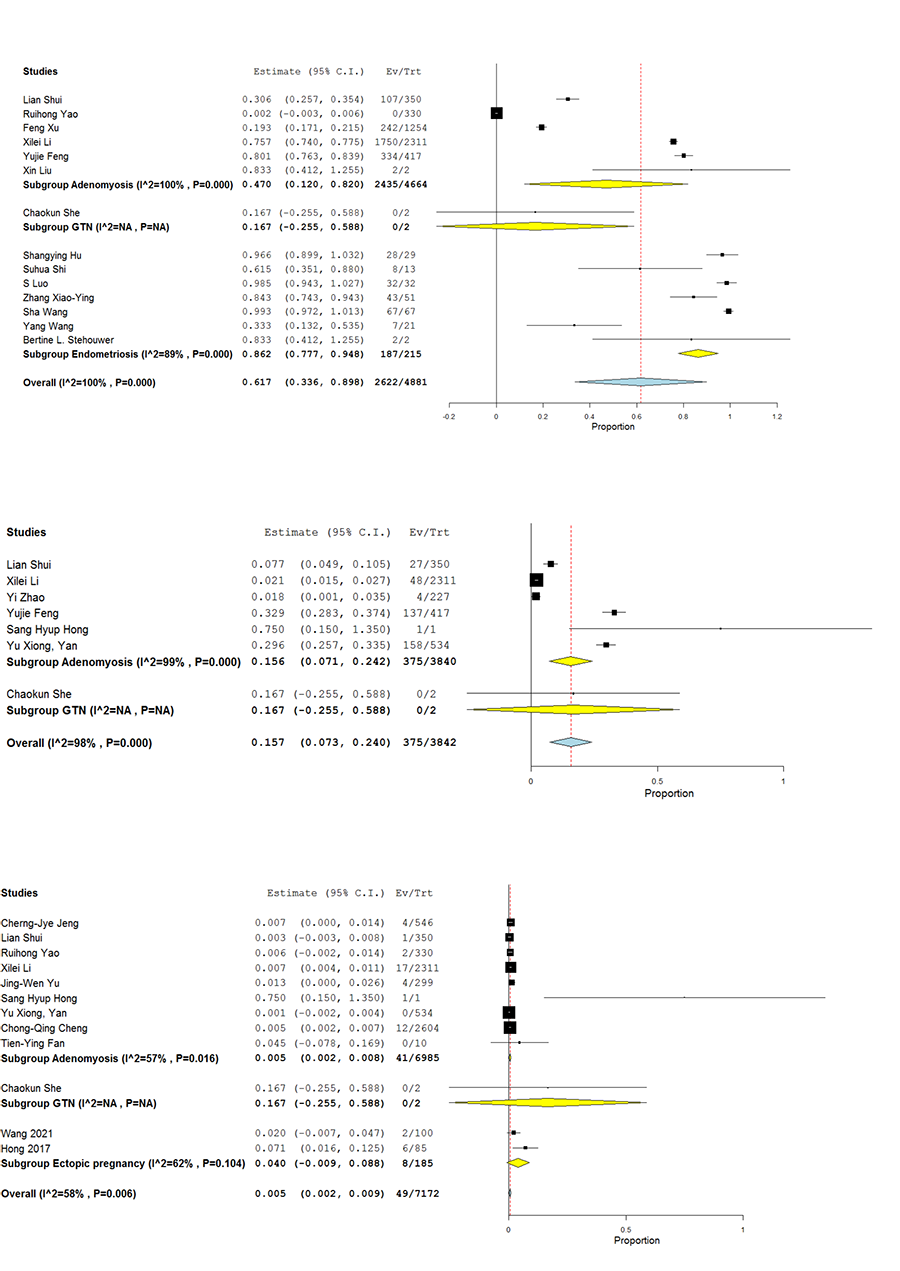
Type A categorythat did not require clinical intervention includes pain at the treatment site, which estimated pooled RR with a 95% CI of 0.61 (0.33, 0.89). however, abnormal vaginal discharge estimated 0.16 (0.073, 0.24), In terms of low-grade fever (<38 °C) RR and 95% CI; 0.005 (0.002, 0.009) . depicts the forest plots for pain at the treatment site, abnormal vaginal discharge, and fever.
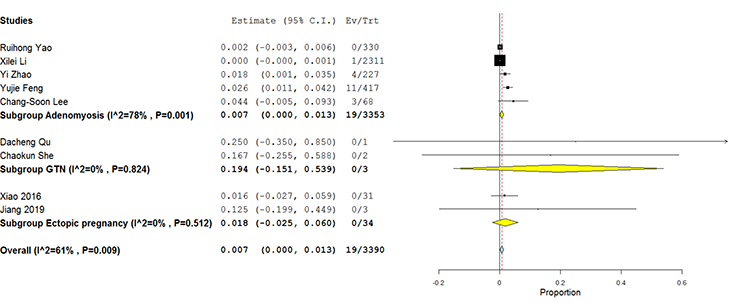
We also found that patients treated with HIFU may experience sensory abnormalities in the lower limbs (Lower limb paraesthesia), but it is very rare that only occurred in 19 patients out of 3390 individuals additionally, we noticed gradual relief of symptoms within one month after treatment ().Forest plots for lower limb paraesthesia.
Regarding SIR type(B), 99 of a total of 6.437 patients had small vesicles and superficial burns, with pooled RR and 95% CI: 0.012 (0.007, 0.018). In terms of groin or perianal pain, our RR with 95% CI was 0.1 (0.067, 0.13). lower abdominal pain RR and 95% CI; 0.38 (0.25, 0.51). However, vaginal bleeding was detected in only 32 out of a total of 3.017 (). Forest plots for superficial burns, groin pain, lower abdominal pain, vaginal bleeding.
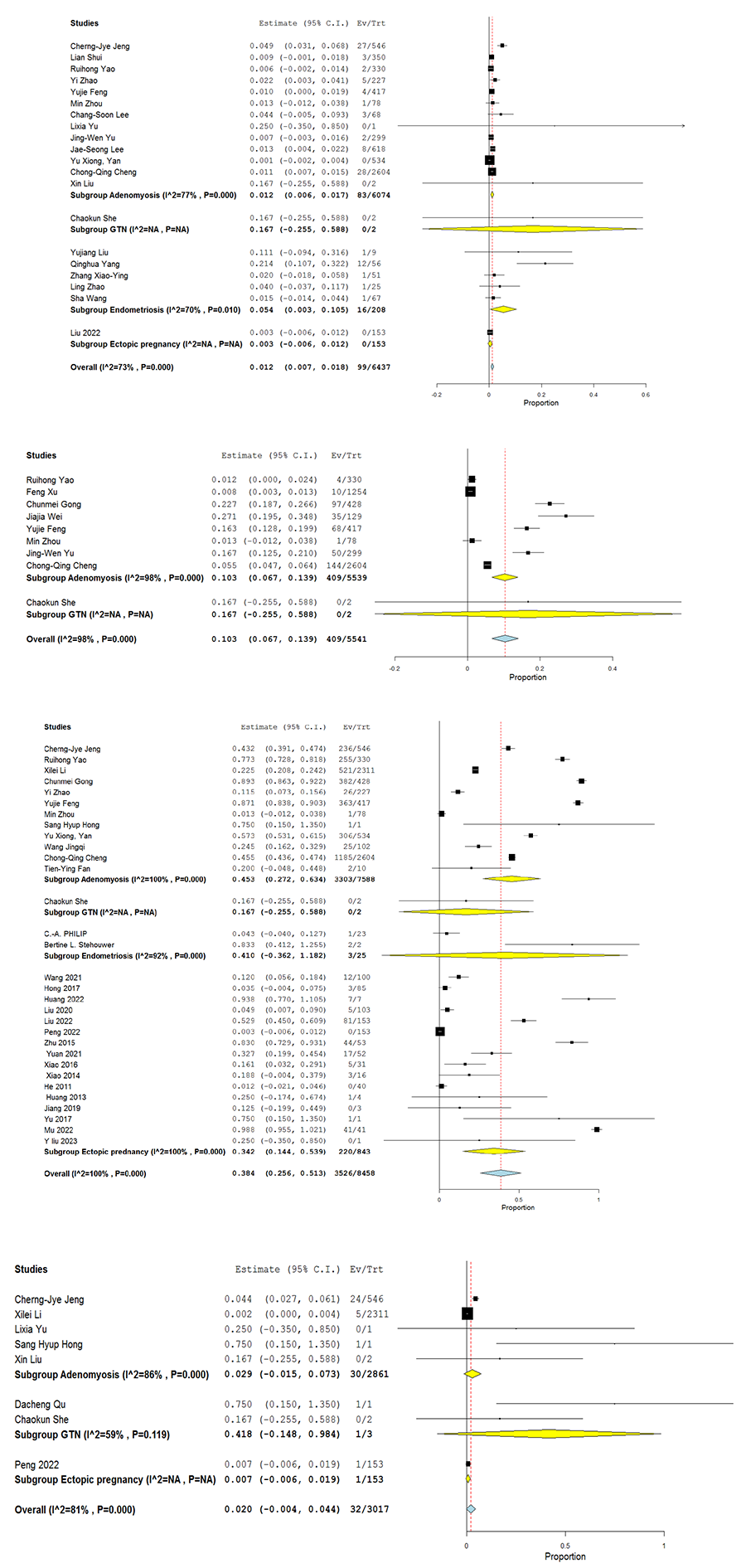
Major adverse events SIR type (C&D) like lumber disc herniation, thrombocytopenia, and renal failure, were unmentionable. Our included studies did not record any deaths at all ().Showed some studies reporting major adverse events and their number (). Forest plots for death.
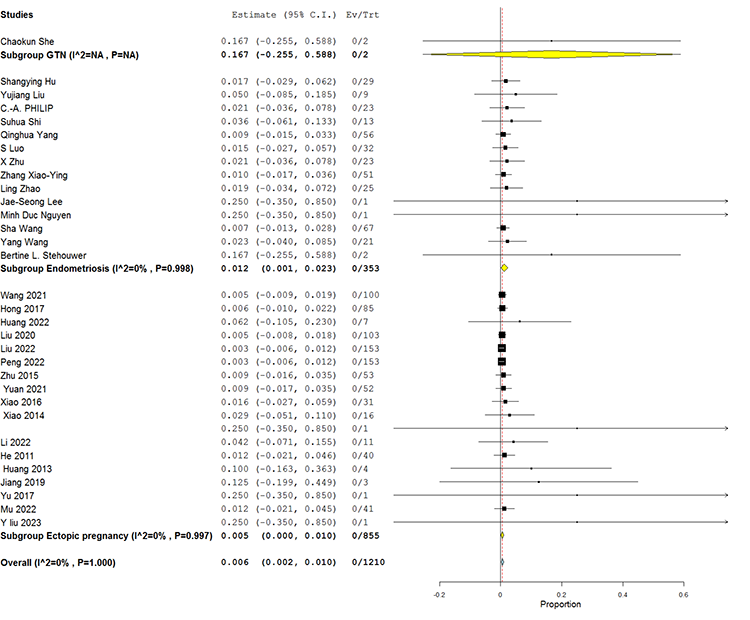
showed some studies reporting major adverse events and their number.
Back or Sacral Pain
Sacral pain was evaluated in 11 studies with 4183 patients in our pooled RR with 95% CI=0.3 (0.1, 0.5). the pooled studies represent major heterogeneity, so we used a random effect model the I2=100%, and chi-p=0.0001 (). Represents the forest plots for sacral pain.
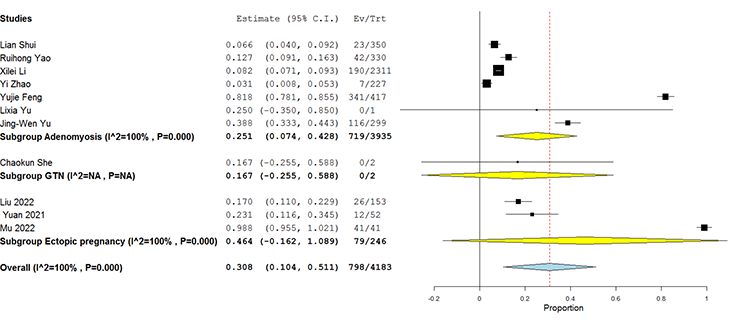
Leg or Buttock Pain
Leg or buttockpain was evaluated in 18 studies involving 8143 patients in our pooled RR analysis with 95% CI=0.25 (0.15, 0.35). The pooled studies represent major heterogeneity with I2=100%, and chi-p=0.0001 () depicts the forest plots for leg or buttock pain.
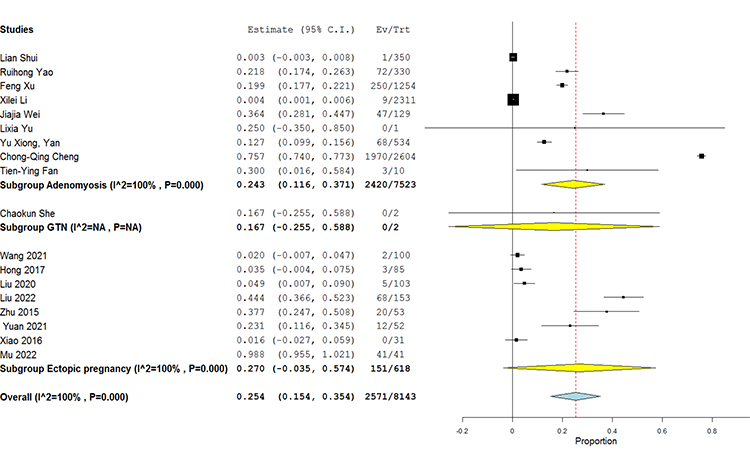
Nausea & Vomiting
Nausea and vomiting were examined in 11 studies totaling 4.183 patients, with only 112 experiencing nausea and 111 experiencing vomiting. Our pooled RRs and 95% CIs for nausea and vomiting were; 0.024 (0.01, 0.03) and 0.023 (0.009, 0.037), respectively. The pooled studies on this outcome were heterogeneous with I2 82% and chi-p=0.001 for nausea and 84% and 0.001 for vomiting. , show the forest plots for nausea and vomiting.
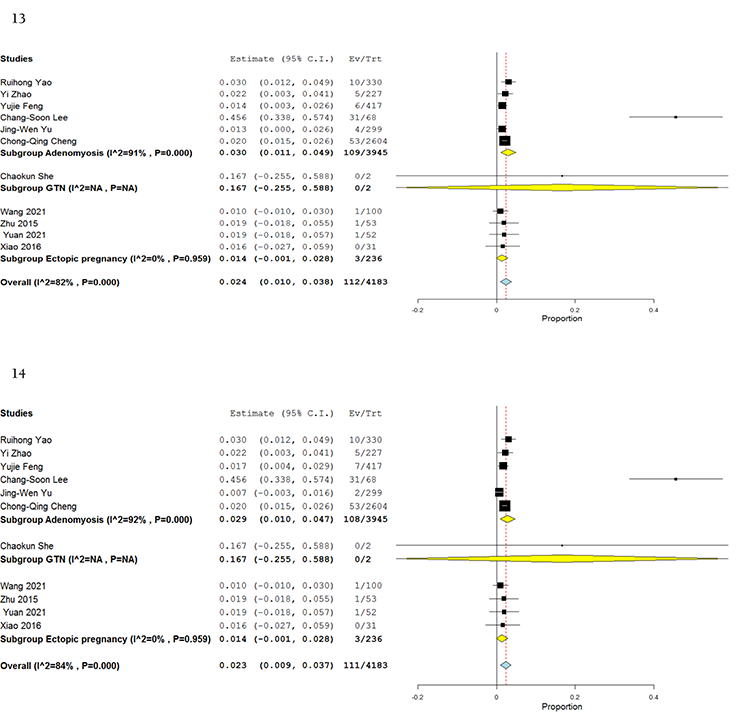
Hematuria
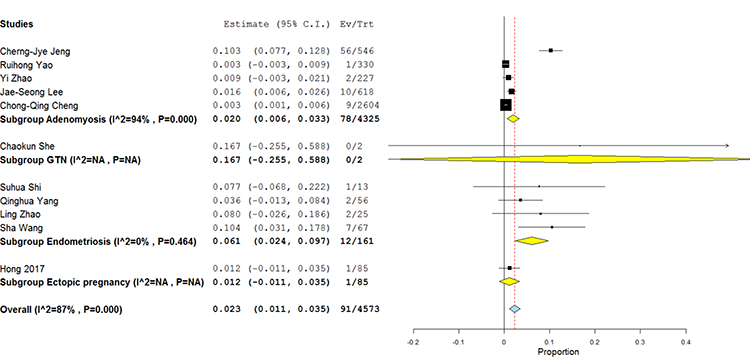
Hematuria was evaluated in 11 studies totaling 4.573 patients; only 91 cases were found to have hematuria. Additionally, our pooled RR with 95% CI=0.25 (0.15, 0.35). The pooled studies represent major heterogeneity with I2=87%, and chi-p=0.0001(). Represents the forest plot of hematuria.
Discussion
This systematic review and meta-analysis provides direct evidence of HIFU in terms of safety. Our systematic review and meta-analysis investigated the different adverse events of HIFU in individuals with adenomyosis, EP, endometriosis, or gestational trophoblastic disease. across 56 studies, including approximately 11.740 patients. In terms of mild to moderate adverse events that did not require clinical intervention, we found that pain at the treatment site estimated RR with 95% CI: 0.61 (0.33, 0.89), abnormal vaginal discharge 0.16 (0.073, 0.24), low-grade fever (<38 °C) 0.005 (0.002, 0.009). Sensory abnormalities of the lower limbs were examined in 3.390 individuals and observed in only 19 patients who experienced gradual relief of symptoms within one month after treatment. However, regarding adverse events that required treatment, 99 of a total of 6.437 patients had small vesicles and superficial burns, with pooled RR and 95% CI: 0.012 (0.007, 0.018). In terms of groin or perianal and lower abdominal pain, our RRs with 95% CIs were 0.1 (0.067, 0.13) and 0.38 (0.25, 0.51). However, vaginal bleeding was detected in only 32 out of a total of 3.017.
Major adverse events like lumber disc herniation, thrombocytopenia, and renal failure, were unmentionable. Additionally, our included studies did not record any deaths. The geographical distribution of the cohort is mainly China, Korea, and Hong Kong.
In women, benign breast lumps are the most common complaint and are more likely to be attacked than malignant breast lumps. One of them is fibro-adenomas. The only noninvasive transcutaneous ablative therapy that has been shown to treat a variety of solid mass types is HIFU or HIF-U. It is possible to rapidly build up enough energy in the region to cause coagulative necrosis and ablate the target lesion.
According to Liang et al.(), following HIFU, approximately 25% of the patients in their research had subcutaneous edema and mild skin redness. None of the patients presented with any evidence of significant epidermis burns.
According to Wang et al.(), five out of the 88 patients experienced skin blistering after receiving HIFU therapy; these patients healed with conservative measures. Furthermore, in their study, there were no serious side effects, such as multiple organ failure or malfunction, severe heat damage, bleeding, or intestinal perforation.
The incidence frequency of hepatic ectopic pregnancy (HEP), a relatively uncommon form of EP, has been estimated at 1 in 15.000 instances().
Wang et al.() discovered 31 cases of HEP in the literature within 60 years. Due to the liver’s high vascularity, 26 cases required laparotomy, which is associated with a significant risk of severe surgical hemorrhage.
Although hepatocellular carcinoma (HCC) has not been treated with HIFU regularly, it has been reported to be treated with excellent success, particularly when the tumor mass is less than 3 cm. For cases in which the HCC mass was less than 3 cm, Ng et al.() found efficacy exceeding 90%.
Furthermore, Xu’s study() included all patients with HCC who received HIFU treatment. After 2 years, the survival rate of stage 1 HCC was approximately 80%, whereas that of stage 2 HCC was approximately 51.4%. Furthermore, except for different levels of skin burns, no known adverse effects were associated with decline in liver function.
Therefore, we consider HIFU is a potential therapeutic option for HEP given its non-invasiveness compared with laparotomy and its safety for the function of hepatic tissue.
One prevalent gynecological issue that frequently requires surgical treatment is uterine fibroids. Due to their ability to prevent surgical morbidity and preserve the uterus, minimally invasive procedures like ultrasound-guided high-intensity focused ultrasound (USG HIFU), are becoming increasingly common. To manage symptoms and fibroid development, medical interventions, such as selective estrogen receptor modulators and gonadotropin-releasing hormone analogs, may be used. Unfortunately, the adverse effects or frequent failure of these therapies make them unsuitable for long-term use().
However, although surgical therapies for fibroids, including hysterectomy and myomectomy, are effective, up to 10% of individuals experience postoperative problems(-).
One patient presented with L4 nerve radiculopathy after presenting with foot drop and left lower limb paralysis following USG HIFU. Pregabalin was administered, and the patient was treated conservatively. In three months, she recovered completely and experienced no long-term effects. During the course of HIFU, no further significant adverse effects were observed. A few minor problems, such as mild lower abdominal pain or discomfort, resolved on their own. After treatment, all patients returned to their regular activities, with the exception of one who had L4 nerve radiculopathy. None of the HIFU cases required blood transfusion, and no skin burn incidents were documented().
Our study has several strengths. No previous systematic reviews have been published on this topic, so we are first. Additionally, we have a very large sample size of 11,74,000 among 56 studies that make our evidence less liable for negative results and more robust. However, our study was not free from limitations. First is lack of a comparator because of the single-arm design, also our included studies exhibited different designs, so we used different methodologies in assessment. HIFU was compared on diverse gynecological and obstetric diseases, and this gives potential biases in our analysis. These limitations require meticulous analysis and cautious interpretation of the results.
Conclusion
HIFU, either alone or in combination with oxytocin or any other enhancing agent, is safe for patients with different gynecological and obstetric diseases. In terms of efficacy, it showed promising results compared with traditional treatment lines.To our knowledge, we are the first and most comprehensive meta-analysis in the literature that has studied the different safety outcomes related to HIFU as a treatment modality for different obstetric and gynecological diseases with a very large sample size, making our evidence strong and less attributed to errors.
Footnotes
Ethics
Authorship Contributions
Design: M.M.A., E.A.H.F., C.R.M., Data Collection or Processing: M.M.A., C.R.M., E.O., P.K.R., E.A.H.F., Analysis or Interpretation: M.M.A., E.A.H.F., C.R.M., E.O., P.K.R., Literature Search: M.M.A., E.A.H.F., C.R.M., E.O., P.K.R., Writing: E.A.H.F.
Conflict of Interest: No conflict of interest was declared by the authors.
Financial Disclosure: The authors declared that this study received no financial support.
References
Izadifar Z, Izadifar Z, Chapman D, Babyn P. An Introduction to High Intensity Focused Ultrasound: Systematic Review on Principles, Devices, and Clinical Applications. J Clin Med. 2020;9:460.
Tashtoush A. High-Intensity Focused Ultrasound (HIFU) Technique for Ablation of Various Disease Treatments Guided by Ultrasound. In. J Simulation--Systems Sci Technol. 2016;17.
Vercellini P, Viganò P, Somigliana E, Daguati R, Abbiati A, Fedele L. Adenomyosis: epidemiological factors. Best Pract Res Clin Obstet Gynaecol. 2006;20:465-77.
Wood C. Surgical and medical treatment of adenomyosis. Hum Reprod Update. 1998;4:323-36.
Balleyguier C, Chapron C, Chopin N, Hélénon O, Menu Y. Abdominal wall and surgical scar endometriosis: results of magnetic resonance imaging. Gynecol Obstet Invest. 2003;55:220-4.
Falcone T, Lebovic DI. Clinical management of endometriosis. Obstet Gynecol. 2011;118:691-705.
Liu Y, Huang J, Du C, Jiang J, Zhou H, Qu D. High-intensity focused ultrasound as a pretreatment combined with hysteroscopic resection for gestational trophoblastic neoplasia with chemotherapy intolerance: a case report. Int J Hyperthermia. 2023;40:2192448.
Pisal N, North C, Tidy J, Hancock B. Role of hysterectomy in management of gestational trophoblastic disease. Gynecol Oncol. 2002;87:190-2.
Cheng LY, Lin PY, Huang FJ, Kung FT, Chiang HJ, Lin YJ, et al. Ectopic pregnancy following in vitro fertilization with embryo transfer: A single-center experience during 15 years. Taiwan J Obstet Gynecol. 2015;54:541-5.
American College of Obstetricians and Gynecologists’ Committee on Practice Bulletins—Gynecology. ACOG Practice Bulletin No. 193: Tubal Ectopic Pregnancy. Obstet Gynecol. 2018;131:e91-103.
Zhang C, Zhang Y, He J, Zhang L. Outcomes of subsequent pregnancies in patients following treatment of cesarean scar pregnancy with high intensity focused ultrasound followed by ultrasound-guided dilation and curettage. Int J Hyperthermia. 2019;36:926-31.
Komura K, Inamoto T, Masuda H, Watsuji T, Azuma H. Experience with high-intensity focused ultrasound therapy for management of organ-confined prostate cancer: critical evaluation of oncologic outcomes. Acta Biomed. 2012;83:189-96.
Zhu X, Deng X, Wan Y, Xiao S, Huang J, Zhang L, et al. High-intensity focused ultrasound combined with suction curettage for the treatment of cesarean scar pregnancy. Medicine (Baltimore). 2015;94:e854.
Page MJ, McKenzie JE, Bossuyt PM, Boutron I, Hoffmann TC, Mulrow CD, et al. The PRISMA 2020 statement: an updated guideline for reporting systematic reviews. BMJ. 2021 Mar 29;372:n71.
Higgins JPT, Thomas J, Chandler J, Cumpston M, Li T, Page MJ, Welch VA (editors). Cochrane Handbook for Systematic Reviews of Interventions. 2nd Edition. Chichester (UK): John Wiley & Sons, 2019.
Murad MH, Sultan S, Haffar S, Bazerbachi F. Methodological quality and synthesis of case series and case reports. BMJ Evid Based Med. 2018;23:60-3.
Institution NH. Study Quality Assessment Tools.https://www.nhlbi.nih.gov/health-topics/study-quality-assessment-tools.
Jingqi W, Lu Z, Jun Z, Yuhong M, Wei Y, Lifeng R, et al. Clinical Usefulness of the Microbubble Contrast Agent SonoVue in Enhancing the Effects of High-Intensity Focused Ultrasound for the Treatment of Adenomyosis. J Ultrasound Med. 2018;37:2811-9.
Cheng CQ, Zhang RT, Xiong Y, Chen L, Wang J, Huang GH, et al. Contrast-enhanced ultrasound for evaluation of high-intensity focused ultrasound treatment of benign uterine diseases: retrospective analysis of contrast safety. Medicine (Baltimore). 2015;94:e729.
Gong C, Setzen R, Liu Z, Liu Y, Xie B, Aili A, et al. High intensity focused ultrasound treatment of adenomyosis: The relationship between the features of magnetic resonance imaging on T2 weighted images and the therapeutic efficacy. Eur J Radiol. 2017;89:117-22.
Lee JS, Hong GY, Park BJ, Kim TE. Ultrasound-guided high-intensity focused ultrasound treatment for uterine fibroid & adenomyosis: A single center experience from the Republic of Korea. Ultrason Sonochem. 2015;27:682-7.
Yu JW, Yang MJ, Jiang L, Su XY, Chen JY. Factors influencing USgHIFU ablation for adenomyosis with NPVR ≥ 50. Int J Hyperthermia. 2023;40:2211753.
Lee CS, Lee JY, Ro S, Choi S, Moon JY. Comparison of effectiveness of epidural analgesia and monitored anesthesia care for high-intensity focused ultrasound treatment of adenomyosis. Int J Hyperthermia. 2018;35:617-25.
Yu L, Xu L, Xu X. Treatment of cornual pregnancy in a patient with adenomyosis by high-intensity focused ultrasound (HIFU) ablation: A case report. Medicine (Baltimore). 2017;96:e8874.
Gong C, Wang Y, Lv F, Zhang L, Wang Z. Evaluation of high intensity focused ultrasound treatment for different types of adenomyosis based on magnetic resonance imaging classification. Int J Hyperthermia. 2022;39:530-8.
Li X, Zhu X, He S, Jiang Z, Li H, Tian X, et al. High-intensity focused ultrasound in the management of adenomyosis: long-term results from a single center. Int J Hyperthermia. 2021;38:241-7.
Jeng CJ, Ou KY, Long CY, Chuang L, Ker CR. 500 Cases of High-intensity Focused Ultrasound (HIFU) Ablated Uterine Fibroids and Adenomyosis. Taiwan J Obstet Gynecol. 2020;59:865-71.
Yao R, Zhao W, Gao B, Hu J, Wang T. Microbubble contrast agent SonoVue combined with oxytocin improves the efficiency of high-intensity focused ultrasound ablation for adenomyosis. Int J Hyperthermia. 2021;38:1601-8.
Xu F, Lin Z, Wang Y, Gong C, He M, Guo Q, et al. Comparison of high-intensity focused ultrasound for the treatment of internal and external adenomyosis based on magnetic resonance imaging classification. Int J Hyperthermia. 2023;40:2211268.
Liu X, Wang J, Liu Y, Luo S, Yan G, Yang H, et al. High Intensity Focused Ultrasound Ablation for Juvenile Cystic Adenomyosis: Two Case Reports and Literature Review. Diagnostics. 2023;13:1608.
Shui L, Mao S, Wu Q, Huang G, Wang J, Zhang R, et al. High-intensity focused ultrasound (HIFU) for adenomyosis: Two-year follow-up results. Ultrason Sonochem. 2015;27:677-81.
Fan TY, Zhang L, Chen W, Liu Y, He M, Huang X, et al. Feasibility of MRI-guided high intensity focused ultrasound treatment for adenomyosis. Eur J Radiol. 2012;81:3624-30.
Hong SH, Hong GS, Lee CW, Kim GH. Complication Following Ultrasound-Guided High-Intensity Focused Ultrasound for the Treatment of Uterine Adenomyosis: Case Report of CT Imaging Features. J Korean Soc Radiol 2019;80:579-84.
Xiong Y, Yue Y, Shui L, Orsi F, He J, Zhang L. Ultrasound-guided high-intensity focused ultrasound (USgHIFU) ablation for the treatment of patients with adenomyosis and prior abdominal surgical scars: A retrospective study. Int J Hyperthermia. 2015;31:777-83.
Zhou M, Chen JY, Tang LD, Chen WZ, Wang ZB. Ultrasound-guided high-intensity focused ultrasound ablation for adenomyosis: the clinical experience of a single center. Fertil Steril. 2011;95:900-5.
Feng Y, Hu L, Chen W, Zhang R, Wang X, Chen J. Safety of ultrasound-guided high-intensity focused ultrasound ablation for diffuse adenomyosis: A retrospective cohort study. Ultrason Sonochem. 2017;36:139-45.
Barat M, Dohan A, Kohi M, Marcelin C, Pelage JP, Denys A, et al. Treatment of adenomyosis, abdominal wall endometriosis and uterine leiomyoma with interventional radiology: A review of current evidences. Diagn Interv Imaging. 2024;105:87-96.
Wei J, Wang L, Tao H, Wang X, Zheng F, He P, et al. Comparison of pregnancy outcomes in infertile patients with different types of adenomyosis treated with high-intensity focused ultrasound. Int J Hyperthermia. 2023;40:2238140.
Qu D, Chen Y, Jiang J, Shi Q, Zhou H, Wang Z. Long-term outcome of ultrasound-guided focused ultrasound ablation for gestational trophoblastic neoplasia in the cesarean scar: a case report. BMC Womens Health. 2022;22:522.
She C, Li S, Wang X, Lu X, Liang H, Liu X. High-intensity focused ultrasound ablation as an adjuvant surgical salvage procedure in gestational trophoblastic neoplasia chemotherapy with chemoresistance or recurrence: two case reports. Int J Hyperthermia. 2021;38:1584-9.
Hu S, Liu Y, Chen R, Xiao Z. Exploring the Diagnostic Performance of Magnetic Resonance Imaging in Ultrasound-Guided High-Intensity Focused Ultrasound Ablation for Abdominal Wall Endometriosis. Front Physiol. 2022;13:819259.
Philip CA, Warembourg S, Dairien M, Lefevre C, Gelet A, Chavrier F, et al. Transrectal high-intensity focused ultrasound (HIFU) for management of rectosigmoid deep infiltrating endometriosis: results of Phase-I clinical trial. Ultrasound Obstet Gynecol. 2020;56:431-42.
Shi S, Ni G, Ling L, Ding H, Zhou Y, Ding Z. High-Intensity Focused Ultrasound in the Treatment of Abdominal Wall Endometriosis. J Minim Invasive Gynecol. 2020;27:704-11.
Wang S, Li BH, Wang JJ, Guo YS, Cheng JM, Ye H, et al. The safety of echo contrast-enhanced ultrasound in high-intensity focused ultrasound ablation for abdominal wall endometriosis: a retrospective study. Quant Imaging Med Surg. 2021;11:1751-62.
Wang Y, Wang W, Wang L, Wang J, Tang J. Ultrasound-guided high-intensity focused ultrasound treatment for abdominal wall endometriosis: preliminary results. Eur J Radiol. 2011;79:56-9.
Lee JS, Kim YJ, Hong GY, Nam SK, Kim TE. Abdominal wall endometriosis treatment by ultrasound-guided high-intensity focused ultrasound ablation: a case report. Gynecol Endocrinol. 2019;35:109-11.
Zhu X, Chen L, Deng X, Xiao S, Ye M, Xue M. A comparison between high-intensity focused ultrasound and surgical treatment for the management of abdominal wall endometriosis. BJOG. 2017;124(Suppl 3):53-8.
Hong Y, Guo Q, Pu Y, Lu D, Hu M. Outcome of high-intensity focused ultrasound and uterine artery embolization in the treatment and management of cesarean scar pregnancy: A retrospective study. Medicine (Baltimore). 2017;96:e7687.
Huang Y, Zhu X, Wang L, Ye M, Xue M, Deng X, et al. Clinical analysis of high-intensity focused ultrasound (HIFU) combined with hysteroscopy-guided suction curettage (HGSC) in patients with cervical pregnancy. Int J Hyperthermia. 2022;39:1233-7.
Liu Y, Yin Q, Xu F, Luo S. Clinical efficacy and safety of high-intensity focused ultrasound (HIFU) ablation in treatment of cesarean scar pregnancy (CSP) I and II. BMC Pregnancy Childbirth. 2022;22:607.
Liu CN, Tang L, Sun Y, Liu YH, Yu HJ. Clinical outcome of high-intensity focused ultrasound as the preoperative management of cesarean scar pregnancy. Taiwan J Obstet Gynecol. 2020;59:387-91.
Peng Y, Dai Y, Yu G, Jin P. Analysis of the type of cesarean scar pregnancy impacted on the effectiveness and safety of high intensity focused ultrasound combined with ultrasound-guided suction curettage treatment. Int J Hyperthermia. 2022;39:1449-57.
Wang W, Chen Y, Yang Y, Qu D, Jiang J. High-intensity focused ultrasound compared with uterine artery chemoembolization with methotrexate for the management of cesarean scar pregnancy. Int J Gynaecol Obstet. 2022;158:572-8.
Yuan Y, Pu D, Zhan P, Zheng Y, Ren Q, Teichmann AT. Focused Ultrasound Ablation Surgery combined with ultrasound-guided suction curettage in the treatment and management of Cesarean Scar Pregnancy. Eur J Obstet Gynecol Reprod Biol. 2021;258:168-73.
Xiao J, Shi Z, Zhou J, Ye J, Zhu J, Zhou X, et al. Cesarean Scar Pregnancy: Comparing the Efficacy and Tolerability of Treatment with High-Intensity Focused Ultrasound and Uterine Artery Embolization. Ultrasound Med Biol. 2017;43:640-7.
Peng Y, Dai Y, Yu G, Jin P. High-intensity focused ultrasound ablation combined with systemic methotrexate treatment of intramural ectopic pregnancy: A case report. Medicine (Baltimore). 2022;101:e31615.
Li W, Gan X, Kashyap N, Zou L, Zhang A, Xu D. Comparison of high-intensity focused ultrasound ablation and uterine artery embolization in the management of cervical pregnancy. Front Med (Lausanne). 2022;9:990066.
He GB, Luo W, Zhou XD, Liu LW, Yu M, Ma XD. A preliminary clinical study on high-intensity focused ultrasound therapy for tubal pregnancy. Scott Med J. 2011;56:214-9.
Huang L, Du Y, Zhao C. High-intensity focused ultrasound combined with dilatation and curettage for Cesarean scar pregnancy. Ultrasound Obstet Gynecol. 2014;43:98-101.
Jiang J, Xue M. The treatment of cervical pregnancy with high-intensity focused ultrasound followed by suction curettage: report of three cases. Int J Hyperthermia. 2019;36:273-6.
Mu L, Weng H, Wang X. Evaluation of the treatment of high intensity focused ultrasound combined with suction curettage for exogenous cesarean scar pregnancy. Arch Gynecol Obstet. 2022;306:769-77.
Liang M, Zhang Z, Zhang C, Chen R, Xiao Y, Li Z, et al. Feasibility and efficacy of ultrasound-guided high-intensity focused ultrasound of breast fibroadenoma. Int J Hyperthermia. 2023;40:2240548.
Wang SW, He XY, Li MZ. High-intensity focused ultrasound compared with irradiation for ovarian castration in premenopausal females with hormone receptor-positive breast cancer after radical mastectomy. Oncol Lett. 2012;4:1087-91.
Cai YY, Xiao EH, Shang QL, Xiao LZ. Ectopic pregnancy in the liver incidentally diagnosed by imaging: A case report. Exp Ther Med. 2017;14:373-6.
Wang J, Su Z, Lu S, Fu W, Liu Z, Jiang X, et al. Diagnosis and management of primary hepatic pregnancy: literature review of 31 cases. Arch Gynecol Obstet. 2018;298:235-42.
Ng KK, Poon RT, Chan SC, Chok KS, Cheung TT, Tung H, et al. High-intensity focused ultrasound for hepatocellular carcinoma: a single-center experience. Ann Surg. 2011;253:981-7.
Xu G, Luo G, He L, Li J, Shan H, Zhang R, et al. Follow-up of high-intensity focused ultrasound treatment for patients with hepatocellular carcinoma. Ultrasound Med Biol. 2011;37:1993-9.
Sabry M, Al-Hendy A. Medical treatment of uterine leiomyoma. Reprod Sci. 2012;19:339-53.
Clarke-Pearson DL, Geller EJ. Complications of hysterectomy. Obstet Gynecol. 2013;121:654-73.
Sleiman Z, Baba RE, Garzon S, Khazaka A. The Significant Risk Factors of Intra-Operative Hemorrhage during Laparoscopic Myomectomy: A Systematic Review. Gynecol Minim Invasive Ther. 2019;9:6-12.
Martinez MEG, Domingo MVC. Size, Type, and Location of Myoma as Predictors for Successful Laparoscopic Myomectomy: A Tertiary Government Hospital Experience. Gynecol Minim Invasive Ther. 2018;7:61-5.
Jindal S, Jung J, Lee K, Chern B. High-intensity Focused Ultrasound for the Treatment of Fibroids: A Single-center Experience in Singapore. Gynecol Minim Invasive Ther. 2023;12:15-25.
Zhao Y, Luo S, Liu Y, He Y, Liu X, Guohua H, et al. High intensity focused ultrasound treatment for adenomyosis: comparison of efficacy based on MRI features. Int J Hyperthermia. 2023;40:2197574.
Liu Y, Wen W, Qian L, Xu R. Safety and efficacy of microwave ablation for abdominal wall endometriosis: A retrospective study. Front Surg. 2023;10:1100381.
Yang Q, Zhang X. Efficacy and safety of high-intensity focused ultrasound ablation for rectus abdominis endometriosis: a 7-year follow-up clinical study. Quant Imaging Med Surg. 2023;13:1417-25.
Xiao-Ying Z, Hua D, Jin-Juan W, Ying-Shu G, Jiu-Mei C, Hong Y, et al. Clinical analysis of high-intensity focussed ultrasound ablation for abdominal wall endometriosis: a 4-year experience at a specialty gynecological institution. Int J Hyperthermia. 2019;36:87-94.
Luo S, Zhang C, Huang JP, Huang GH, He J. Ultrasound-guided high-intensity focused ultrasound treatment for abdominal wall endometriosis: a retrospective study. BJOG. 2017;124(Suppl 3):59-63.
Zhao L, Deng Y, Wei Q, Chen J, Zhao C. Comparison of ultrasound-guided high-intensity focused ultrasound ablation and surgery for abdominal wall endometriosis. Int J Hyperthermia. 2018;35:528-33.
Nguyen MD. Magnetic Resonance Imaging-guided High-intensity Focused Ultrasound Ablation for Endometriosis of the Abdominal Wall. Gynecol Minim Invasive Ther. 2020;9:45-6.
Stehouwer BL, Braat MNG, Veersema S. Magnetic Resonance Imaging-Guided High-Intensity Focused Ultrasound is a Noninvasive Treatment Modality for Patients with Abdominal Wall Endometriosis. J Minim Invasive Gynecol. 2018;25:1300-4.
Xiao J, Zhang S, Wang F, Wang Y, Shi Z, Zhou X, et al. Cesarean scar pregnancy: noninvasive and effective treatment with high-intensity focused ultrasound. Am J Obstet Gynecol. 2014;211:356.e1-7.